
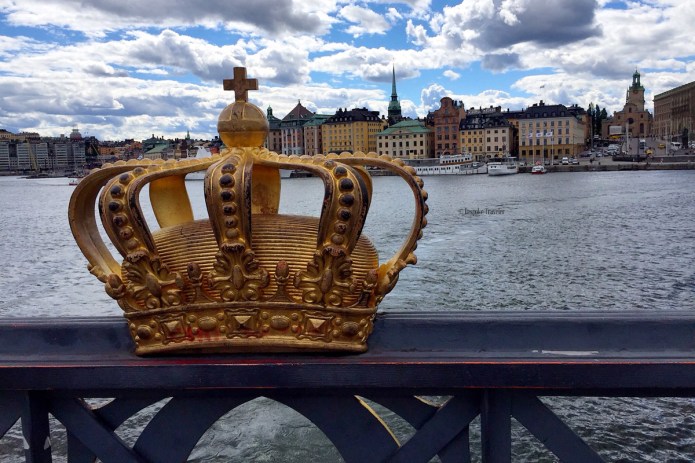
 Cities narrate stories without the need for words. In their architecture, their organization, their geography, our urban centers dictate how we should live in them. They show us what ideals they value, what principles they follow. People do the same. Often the needs of the populace and the demands of the metropolis conflict. I see it in the way glass, steel, and concrete have overtaken public parks and gardens. I notice it in the treeless motorways criss-crossing one another over denuded terrain. I observe it in the barbed wire perches to keep birds away, in the contorted metal benches to ward off loafers, in the barren privately owned cement courtyards dotting municipalities.
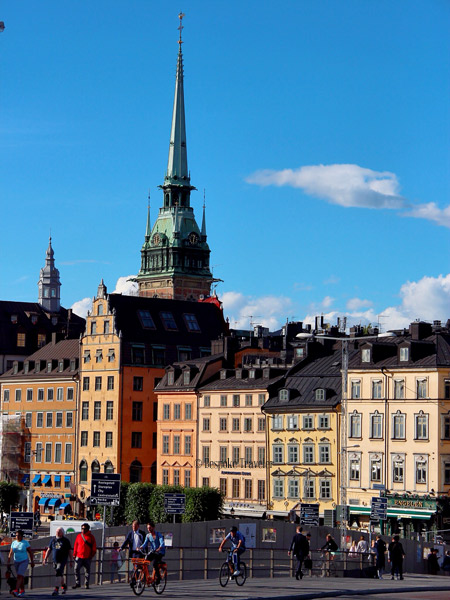 The qualities of settlements which made them essential to us in the past no longer hold sway. From creating artificial islands to damming rivers we keep separating ourselves from the ecosystem to which we belong.
 So I was a skeptic when I arrived in Stockholm, Sweden. I hesitated to believe that this modern capital had anything to offer except dull architectonics and estrangement from nature. I was in for a surprise. Covering fourteen archipelagos, Stockholm is a third waterways, a third green spaces, and a third civilization. Balance between productivity and eudaemonia is the main narrative. Everything in moderation, or “lagom,” is the operative motto. The pursuit of this equilibrium is achieved through a confluence of design which seeks to incorporate beauty, comfort, community, and functionality into every facet of the workaday.
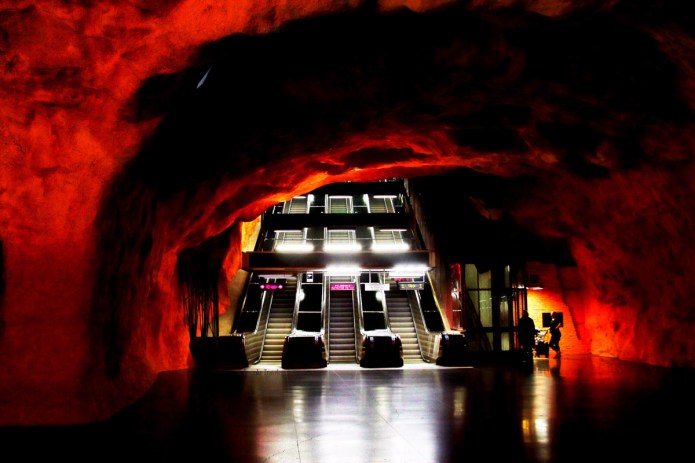
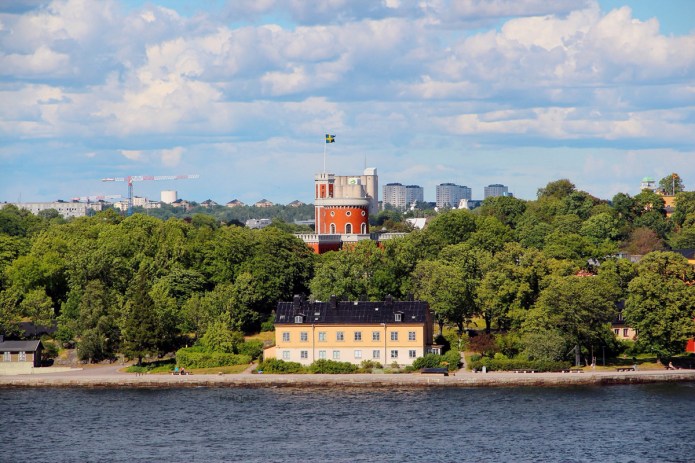 There are no barricades here. I walk from the narrow alleys of Gamla Stan to the shady slopes of Vita Bergen in Södermalm. I hop on a ferry chugging past the lush shorelines of Värmdö to a tranquil trail in Djurgården. I travel through underground caverns in search of sylvan boulevards…and find them. No one rushes about, head down. No one frowns when I lean against the railing to watch gulls play along the pier. No one forbids me from lolling along the embankment.
 This is not to say that Stockholm is perfect. Time and money constrictions hamper sustainability. Scaling up biodiversity in an expanding market is a challenge. The ecological experience is not available to all. However, the city continues its dedication to transforming into a place where nature integrates into neighborhood.
 The future of Stockholm is in the hands of thinkers, designers, and developers. They will have to shape its civic structure to align with our changing earth. What provides me hope is that Stockholm today is a destination in flux, willing to learn from its mistakes. It is a sanctuary, open to both humanity and the wider interconnected network in which we exist.

TRAVEL NOTE:
Hammarby sjöstad is one of several development projects within Stockholm’s jurisdiction which seeks to implement a green-blue infrastructure embracing energy conservation, natural aesthetics, and evolving social services to residents.
What features are necessary to you in urban spaces? What resources delight you in a city, which ones do you not prefer? Let me know in the comments below.
Discover more from Bespoke Traveler
Subscribe to get the latest posts sent to your email.





 Bespoke Traveler
Beautiful photos and intriguing ideas. You are absolutely right–in that each city reflects the attitudes and history of its people. Each city must decide how to create a balance between their architecture, organization and geography. I think that is what is so fascinating about “older” cities. How do they transform themselves to become more modern? Do they integrate the old and new? Do they transform the “old?”
Thank you. I think Stockholm is privileged in that it has been answering these questions (and has a system in place to respond to those ideas) since the 1970s. Most cities are just now shifting from expansion (the urban sprawl) to grappling with how to create balance and how to handle the needs of its population within the constraint of resources.
A city I’ve long meant to see, and so accessible now from my part of the world. I really must try and make it happen. Thanks for sharing the beauty, AG 🙂 🙂
Glad I could show you a bit of Stockholm. It’s a delightful place and I think you’d enjoy the blend of parks, waterways, modern city, and historic Gamla Stan. No one rushes about and that feels so unnervingly refreshing in a cityscape.
You’d think they might because I wouldn’t think it’s always the warmest place! The last few days have been exceptional here 🙂 🙂 Didn’t know myself! But it’s grey again now 😦
Sounds like you could really use a Stockholm summer then…twelve to eighteen hour days of nothing but sunshine. 🙃
I love Stockholm. My late aunt lived there and thus I visited Stockholm many times. Great post. Thank You.
I’m so glad you enjoyed the piece. You must have some lovely memories of getting to know Stockholm with your late aunt. My condolences on your loss.
Beautiful words, sentiments. Always a pleasure to tap into your thoughts.
Love the reflections … juxtaposing new and what is significant from what has gone before.
Let’s hope we can learn before it is too late, as you say:
“The qualities of settlements which made them essential to us in the past no longer hold sway … we keep separating ourselves from the ecosystem to which we belong.”
It’s wonderful to hear you say so. Being an optimist is difficult these days, but I am with you in hoping that we can learn before it is too late.
I agree with Heide. Your opening sentence says so much, not just about Stockholm in particular, but cities in general. Stockholm seems to have struck a balance that most other cities either struggle with, or have failed at.
I really hope that other cities will take Stockholm as an example to follow: learning from its attempts, adopting its holistic approach to future development.
My new word of the week: eudaemonia. 🙂 Your photos of Stockholm are stunning. I especially liked the one with the reflection in the glass. Knowing nothing about Sweden’s capital, I enjoyed reading your impressions. It sounds like a city I might like, since it seems to offer a lot of greenery and diversity. Open spaces, no barriers and a combination of architecture and nature… What more do you wanted in a liveable city?
😊 Language is so marvelous. It delights me that you enjoyed the photos so much. Stockholm has a visitor’s pass which allows you access to about sixty of its museums and other attractions as well as boat and bus tours. It is a very walkable city with great public transportation and a travel card available to tourists which allows unlimited use of all its trains and buses. There’s bicycles to rent, plenty of parks, and Gamla Stan (its historic part) is a fun experience. I think you’d enjoy the welcoming atmosphere of Stockholm.
What wonderful photographs these are.
Thank you for taking us along with you!
Thank you so much for coming along on my little virtual tour!
Love the reflection in the windows. On my brief visits, I’ve found Stockholm to be impressive, large yet, as you say, friendly in many ways. A very good city from a tourist’s perspective.
I too loved discovering that reflection of the old upon the new glass building. I’m glad you enjoyed Stockholm as well. Though it is a large city, I found its atmosphere to be very different.
Lovely to see your views of Stockholm, of course. Necessary features for me, are green areas, the old city not torn down, well thought through renovations and the new areas fitting together. Then I like art – everywhere. Living walls are great – flowery and/or filled with plants. Open spaces – but not open spaces in concrete only…except for skateboarding.
Smooth communication – not traffic jams of millions of cars.
Thank you. The features you pointed out were necessary for you in cities speak to me as well, yet I don’t find it often in urban places. Green amid the manmade structures is definitely a must and I love your idea of living walls.
My first and (so far) only visit to Stockholm lies back many, many years, but I vividly remember being very impressed with how green the city appeared. I also loved the many waterways that intersected different neighborhoods. Much might have changed in the interim, but I hope that the Swedish people will continue to preserve and protect their special capital.
I have the same hope for Stockholm as well. Its waterways and its greenery are what make it so beautiful and it would be nice if the future of the city perpetuated this.
“Cities narrate stories without the need for words. In their architecture, their organization, their geography, our urban centers dictate how we should live in them.” Beautifully said! Though from your impressions it sounds like Stockholm is doing a better job than many cities to do it the other way around, by adapting as its people dictate how they want to live. What a wonderful concept …
It’s such a nice way to build rather than forcing people to adjust to the whims of an urban design. It would seem more logical this way, but as you point out that doesn’t happen often.
Was in Stockholm in 2014 for 4 days and loved it. Wish I had more time to explore more of the areas I missed. A great city for a week or more.
Indeed, there is a lot to explore in Stockholm and I would definitely recommend more than a week there to take it all in.
You wove a very inspirational narrative through this posting. Nicely done.
Thanks. So glad you enjoyed it!
Always wanted to visit Stockholm and have never managed to make it but your photos look great and I may have to arrange that visit very soon now.
Excellent to hear! I will be looking forward to your “Land Sailing” adventures there.
I have not been back to Stockholm since 1977 (a high school trip). Even at this young age I was impressed by its geographic position and proximity to nature. It was winter and we skated for miles along perfectly frozen lakes and rivers (one of my fondest memories of all time). I’m glad to read your account about Stockholm’s enlightened approach to design and integration of nature. I think it’s time for a return visit…
That would be an intriguing trip for you. I would be interested to hear how you feel the city has changed from what you remember of your high school trip. I would like to revisit Stockholm in perhaps a decade to explore how this holistic approach to development pans out.