
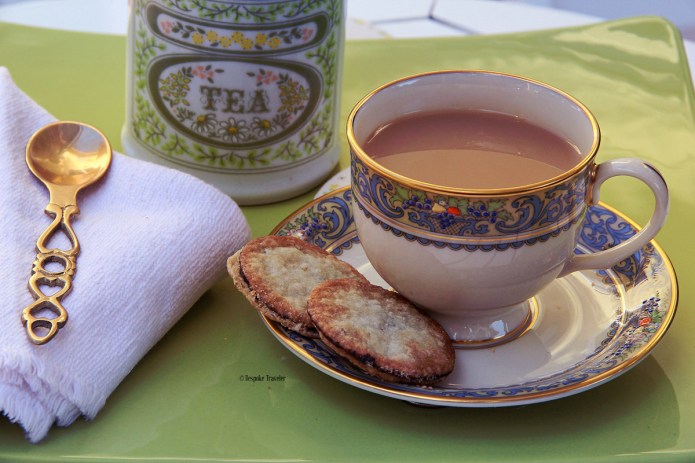
 Learning is an ongoing process for me, but sometimes it is necessary to unlearn. To clear the slate of old biases, to let go of cliched ideas, to sweep the cobwebs away. That’s when I fill the kettle with water, set it to boil. I linger in anticipation for the whistle. I bring out my favorite cup. I debate over Assam, Darjeeling, matcha, silver needle, and rooibos — planning which one will be the most appropriate for my ruminations.
 Inspiration comes best from the citrus bergamot of earl grey. The arms of sweet chamomile provide comfort. Visions emanate from the dusky bloom of Lapsung Souchong. There is a tea for every need, every occasion: the robustness of morning cuppa to begin my day, the pep of Sencha to revive my sinking spirit, the calmness of herbs to soothe, the warmth of spiced chai on a winter’s eve.
 Every tea has its particular requirements as well: the right water temperature, the correct steeping time, the appropriate condiment. It is in this space of engagement, in the art of making tea, that true abundance seeps in. As I wait, progressing from one movement to the next, my surroundings take on presence. While my hands occupy themselves with pouring, adding, lifting, my mind is an emptiness in which the threads of innumerable notions, conversations, and concepts fuse to form new patterns.
 The Chinese tea ceremony is a deliberate process instilled with thoughtfulness. Self-reflection blooms within the complete devotion to preparing tea. Harmony, balance, and tranquility possess each gesture, turning motion into grace. One is reminded of the yin-yang of nature’s rhythms. Performed with the proper attitude, the tea ceremony becomes a form of meditation.
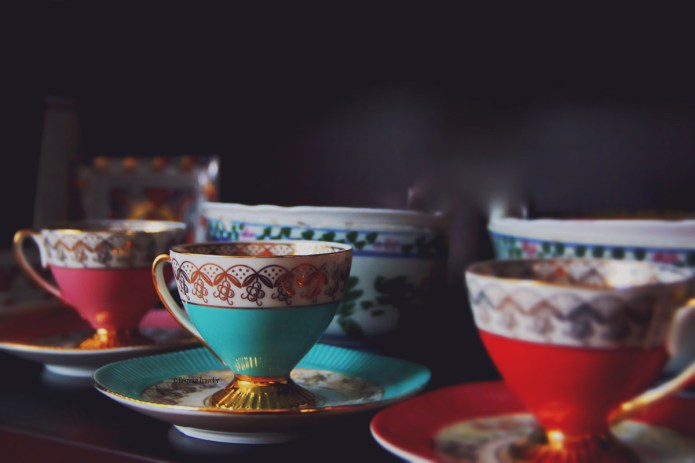 Though I make tea on a less ritualistic level, I encounter an equal degree of zen during the procedure. As I rinse the teapot and mug in warm water, I wash away my distractions. Sniffing the fragrance of the chosen leaves, I forget my limitations. While admiring the simple pleasing quality of the sample, I return to gratitude. As the infusion soaks, so do my contemplations. With every sip there is a reevaluation of what I understand, an appraisal of everything I know. In pursuing the technique of brewing tea, I master the art of unlearning.
BT’s CHINESE TEA CEREMONY RECIPE
Serves 4 Total Time: 25 minutes
WHAT YOU NEED
1 Porcelain or clay pot
1 tea pitcher
1 large bowl or serving tray
1 tea strainer
4 cups
1 tea spoon
1 tea towel
3 cups (710 grams) water
4 tsp (25 grams) oolong tea*
WHAT TO DO
1. Rinse teapot and cups in warm water for 2-3 minutes. Alternately, you can soak them in a tub of warm water for the same amount of time.
2. Boil water in a kettle to 190° F (88° C). Using tea spoon, drop in 4 scoops of oolong tea leaves into teapot. Place teapot upon serving tray or in large bowl. From shoulder height pour hot water into teapot until it overflows.
3. Immediately pour “tea” from pot into the cups through the strainer. Use the towel to protect your hands. This brew is not meant to be drunk, but to season the containers. Dump out the liquid in both the cups and the pot, but do not discard the tea leaves.
4. Hold kettle just above teapot and pour 3 cups of the boiled water into teapot. Make sure the water completely covers all the tea leaves. Close the lid of the pot. Allow tea to steep for 5 minutes. Enjoy conversing with guests while waiting.
5. Pour tea from pot into pitcher through strainer. Transfer tea from pitcher to cups. Serve guests first.
6. Cradling the cup in both hands, inhale the aroma of your beverage. Take a first small sip, allowing tea to roll around your tongue and coat your mouth. Take a second, large sip. Let the beverage warm you. The third, final sip should reveal the aftertaste.
7. After the first round is finished, oolong tea can be steeped five more times if desired. Once guests have drunk enough tea, scoop out the soaked leaves for them to admire.
* BT Tip: If you do not prefer the taste of oolong, you may choose to use Pu’er, which has a grassier, earthy flavor to it.
Discover more from Bespoke Traveler
Subscribe to get the latest posts sent to your email.






 Bespoke Traveler
Great post. A real reminder of being in the moment.
Thank you so very much.
The ceremony/ritual of making tea has a calming effect when done correctly. It’s a pleasure to enjoy in this hectic day and age.
Agreed. I am drawn to little pockets of serenity which I can take during the day to be in the moment. Tea making is one I get to enjoy without any guilt involved.
Thank you for bringing me some zen with this beautiful post. I just love those tea cups in your final photo. I recently read the novel The Tea Girl of Hummingbird Lane by Lisa See (introduced me to Pu’er and the whole tea culture and ritual). So fascinating; I’d like to learn more.
I haven’t heard of “The Tea Girl of Hummingbird Lane,” but I shall hunt it out to read next. Thank you for the recommendation. There is a really in-depth, beautiful non-fiction book on the subject of tea’s history and ceremony in China. It is called “Classic of Tea: Origins and Rituals” and was written in the eighth-century by Lu Yu. The author is a bit of a tyrant when it comes to rules about tea making, but I found his passion to be poetic.
Thanks in turn for the recommendation. Vancouver has a large Chinatown and my google search turned up several places that have courses and tastings. Sounds like a good new fall activity for me. Thanks for getting me motivated.
You’re most welcome. I’m so excited for you to try the tastings! Please, let me know how they turn out.
I love your contemplative tea post! I definitely have become a bigger tea drinker since living abroad. Outside of America – it’s a different place! My BF got me on milk teas and I can see and taste the attraction. But if there is any tea that I drink regularly its peppermint. I like that it soothes my tummy, and tastes good.
Thank you! Having been brought up on English style tea-and-milk I’m a fan of a good cuppa, but I do love peppermint tea! It’s seen me through many queasy situations.
“Performed with the proper attitude,” hmmm if we can apply this philosophy too all things we do…happy preparing and happy sipping.
Indeed! Thank you. ☺️
“Learning is an ongoing process for me, but sometimes it is necessary to unlearn. To clear the slate of old biases, to let go of cliched ideas, to sweep the cobwebs away.”
We totally agree with this statement. It was a well written text. There is so much to learn in the world, so we should try to be unbiased and learn from as many cultures as possible.
I appreciate your kind words. Thank you for stopping by to read the post and chat.
Oh I must admit I know very little about tea. I’m a coffee lover through and through
I’ve learned to enjoy coffee after having discovered some really good beans from my various travels, but for quiet contemplative moments I always return to tea.
Rituals can be so good for the soul, yet we do allow so little time to perform them.
It always comes back to our relationship with time, doesn’t it? Interesting, that.
Yes, time, or the lack thereof! It all depends on our priorities, though, and we need to make time for those moments that are good for our soul.
Ooo yes! I love tea. I recently read “The tea girl of hummingbird lane.” It’s a wonderful book if you haven’t read it. A lot of Pu’er in the book 🙂
Haha. Seems like everyone is reading Lisa See’s book at the moment! I hadn’t even heard of it, but will definitely be getting a copy to read now. Thanks!
It was wonderful, as is all her other books 🙂
I am now craving a cup of tea!! 🙂
Hooray! 😀 My mission is accomplished. Enjoy your delicious cup. 🍵
This is so beautifully written and the photographs are gorgeous too. I am a great lover of tea having grown up in South Africa, which was colonized by the British. For years I had numerous cups of British black tea with milk and two spoons of sugar!!! These days I have long abandoned the milk and the sugar and even the classic tea and opt rather for varieties of herbal concoctions. I love the whole concept of tea ceremonies, the tea leaves, teapots and tea cups. Thanks for a terrific post.
Peta
Thank you Peta for your sweet words and for sharing your favorite types. I too grew up on British tea for years, but have since moved on to Chinese green varieties as well as herbal infusions which are my favorite go to when I’m feeling stressed.
Assam tea is my favourite, brewed strong,left to infuse for several minutes, and then drunk with milk or soy milk. I have a pot of this most mornings, and it is a small moment of quiet, and ritual, and luxury, at the beginning of the day, which I treasure.
A perfect way to deliberately start each day, in my view. Thank you so much for sharing your favorite with me!
Thank you, Bespoke. I just put a similar comment on your Instagram post on the same topic — I hope you don’t mind!
Not at all! I love chatting here and on my Instagram with you!
Reverent! 🙂 🙂 Now I need to know what you unlearnt?
Haha, I do feel rather reverent about my tea time! 😁 I’ve been unlearning how I view determinism.
Well, if you have to unlearn something, that sounds like a good place to start. 🙂 🙂
Lovely post.
I’m a green tea addict and discovered a wonderful Japanese company when I was in Bali. I ended up ordering directly from Japan when I returned home as I could not buy it here.
The ritual of making tea is a great way to slow things down, definitely a time for reflection. 🙂
I quite enjoy various green teas too. So far my favorite is a Japanese matcha I’ve discovered through a friend. Thanks for letting me into your favorite brew!
What a lovely post. 🙂
So grateful to have you stop by. 😊