
T
here’s something to be said against familiarity. It truly does breed a kind of contempt, an inattention to detail, a glossing over of nuance. I think I know what to expect so I stop paying attention. Sitting at a cafe, whose walls are illustrated in jungle themed banana leaves, on the outskirts of Gadigal Country in Sydney, Australia I roost in complacency. I am in a city whose language I speak fluently, whose cuisine I recognize, whose customs I am acquainted with. The lack of tension provides comfort. I don’t need to work at translation. Vigilance is no longer required. The greed of being an amateur expert sways me. Because I know a little, I think I understand.
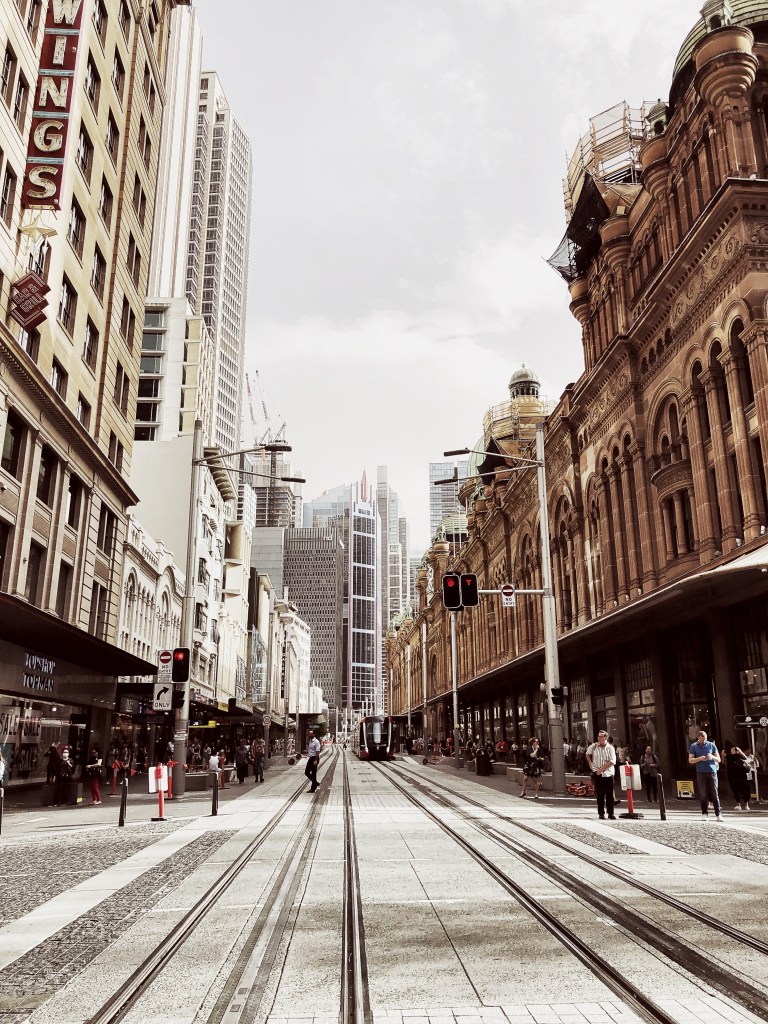
After all, when a modern metropolis looks and behaves like every other, what else is there to glean? A place isn’t unique because it has a colorful sign of its name sitting in a commercial plaza. A location has meaning because it allows one to answer the question: how do I know where I am? So many details can help guide us to the complicated response: geology, historical heritage, vernacular architecture, bioregionalism, artisans, and cultural proclivities. In a place where it’s not possible to experience the joy of being a novice, how can I prevent loss of imagination? How do I search for what’s different about the somewhere I am?
Like mushrooms, the stories are buried. I root, I burrow, I attend to what’s missing from the picture, what seems to like staying hidden, and what is asking for exposure. Rather than clinging to the comfort of the “real thing,” distorting a narrative because it isn’t what pleases me, I adjust to consider other ways of inhabiting this space. After all, I remind myself, there’s a whole distinct season occurring on the opposite hemisphere of the planet.
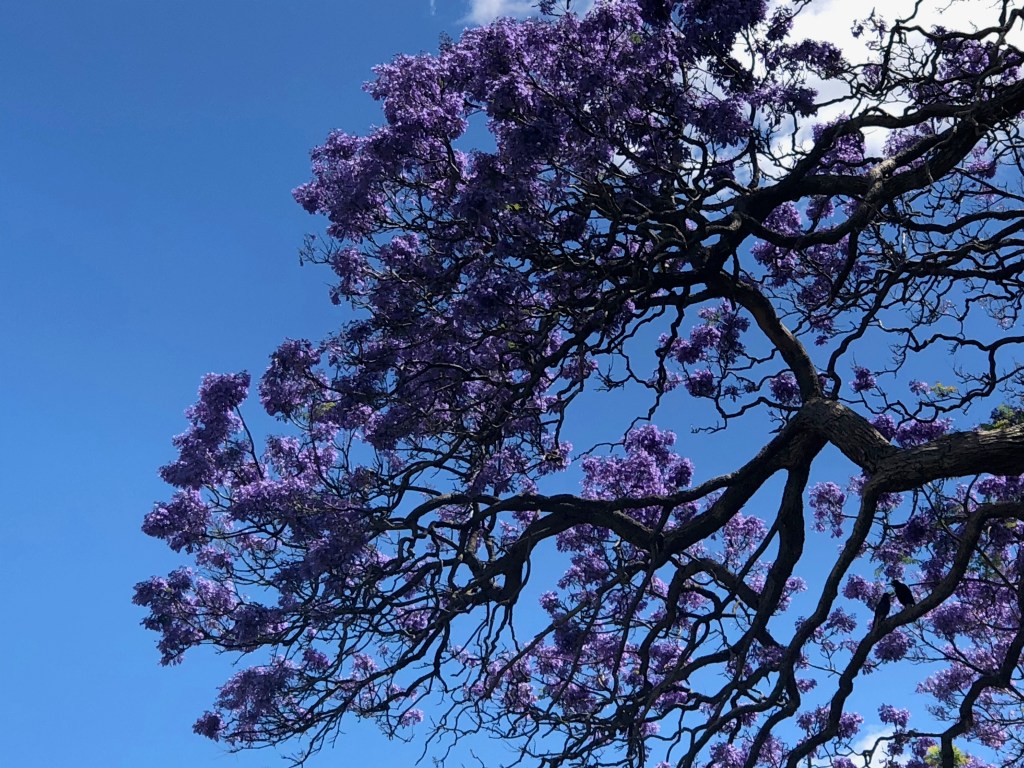
Click-clack, click-clack, click-click-clack. The rhythm beckons. Are the jacaranda branches speaking? Is it the raven floating over the lawn? I ferret my way from silky oaks to rat’s tail orchids draped over a fig. I amble past magnolias to a docent-led group under the umbrella of palms. “Do you feel the streams underneath as your feet touch mother earth?” In the gravel little squiggles appear from the end of the guide’s walking stick, a magical network of tributaries. “These waterways fill up the landscape. Make their way to the five river systems around us. Can you hear them pumping, pumping this heart beat?” Click-click-click. The guide bangs together two wooden batons. “We acknowledge this heart beat. We acknowledge our caretaker mother earth. We acknowledge the water custodians and the wisdom of our elders.”
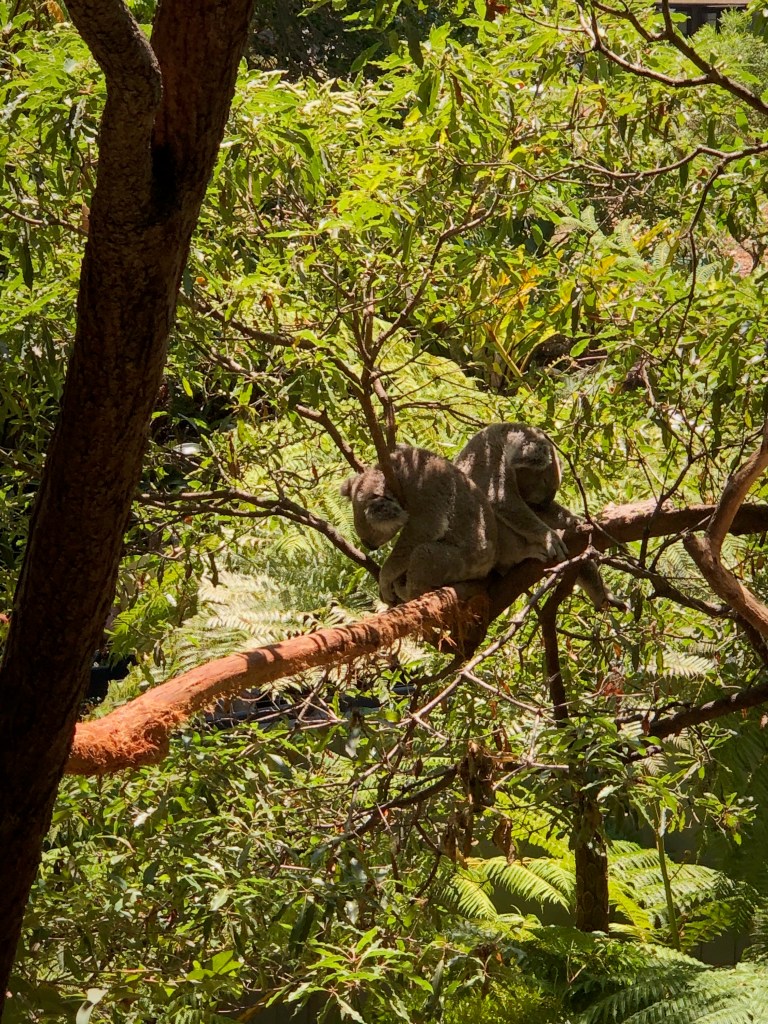
An invitation I can’t ignore to deepen my acquaintance with the region. I wiggle my toes inside their shoes, hoping to catch a hint of that thrumming. “Notice the trees circling these water courses. They are witnesses to our history. Family members. So they and everyone else they sustain becomes part of our circle.” The docent draws a ring in the dirt, encompassed by larger ones. “As our relationship sphere enlarges, so does our imagination. As we move across terrain, we listen to all the stories our kin has to tell so that we can carry their knowledge forward. Because that’s what our purpose is.”
“Earth has already provided us with the tools and blueprints for success. So whether it’s river wattle lore or saltwater fishing laws, we are in constant communication with nature. For our culture, to be ‘of a place,’ is to be in conversation with our surroundings, our ancestors, and with future generations.” My breath catches. How can I still not know the names of my neighborhood plants? Or the history of the redwoods that used to live on the land I walk daily? Or tell the differing chirps of hummingbirds and sparrows nesting in my community? I’ve been busy searching for stories and forgot to listen to the ones being told to me.
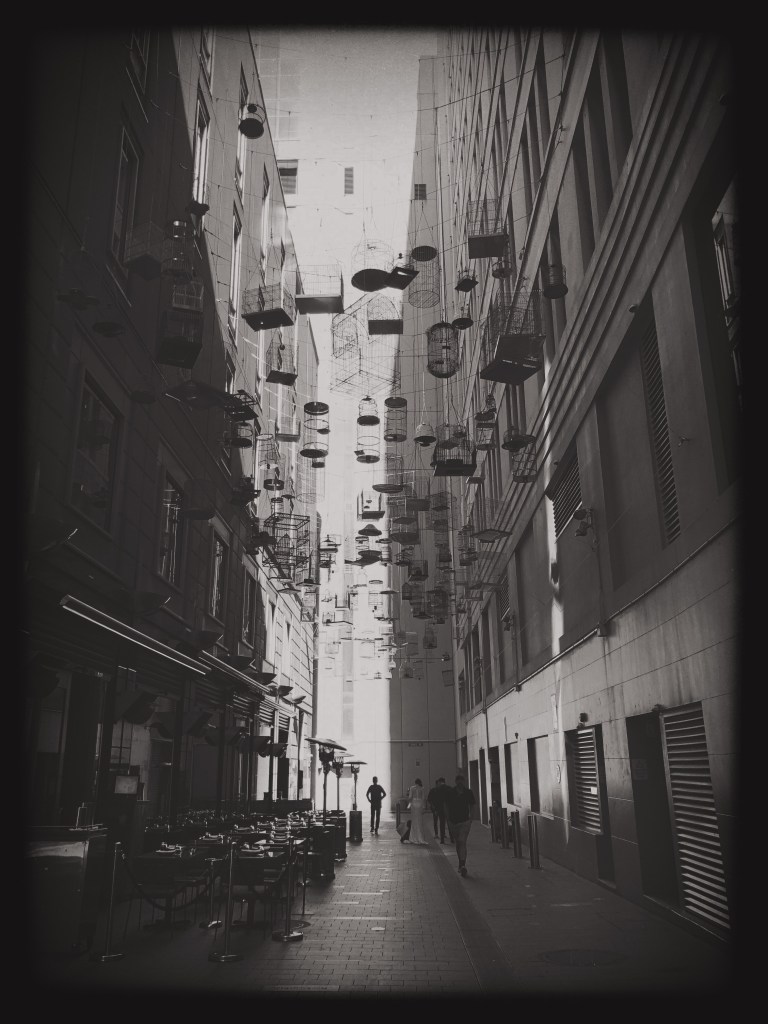
In a narrow alley I hear a symphony of tongues as I watch noodles boiling, dumplings bubbling, and garlic frying. While the Gadigal guide transcribed earth, these transplants interpret flavors. As I read their transmuted histories in the sambal, the gochujang, the hoisin, I think about the importance of translation. A bridge between cultures, an intermediary, an amplifier of limitations, translation can approach a destination but never attain the original’s true meaning. This makes the interpreter in many ways a tourist of implications, a child of languages, a novice to any project. Which doesn’t have to be a deficiency when the translator understands their constraints, when the joy of the work is in the wonder the journey engenders rather than becoming an expert.
For both First Nations and many Asian settlers of this territory, non-linear thinking and translation has been integral to their storytelling and understanding of the world. A way of not only seeing the angled, limited surface tale, but also the ones that keep revolving around time and relationships. Finding these other rivers of narration, navigating the unfamiliar, grappling with the limits of translation keeps us and our world beautifully vibrant and diverse.
TRAVEL NOTE:
“Kindred” by Gunai author and artist Kirli Saunders talks community, weaving personal and universal into each keen poem in the collection.
What is an unfamiliar experience you encountered in another place?
Discover more from Bespoke Traveler
Subscribe to get the latest posts sent to your email.




 Bespoke Traveler
Beautifully crafted narrative, and illustrated, I got to confess I have being lazy from lately with my own blog, and have no wish to set some time and work on it.
Congratulations on your effort.
Thank you so very much for your generous praise! Sometimes, it’s good to take a break and let ideas percolate. I look forward to when you return with more philosophical insights on your blog!
I can hear the Gadigal guide, the ancient wisdom pouring from him, and wish I had learned more when I was growing up there, but the Aboriginal people were not given space then to teach anything about their land. It’s better now but there is still a long way to go.
I like this account of looking deeper. I try to do it, but this is a good reminder. I’ve taken myself out on a few days exploring my city as if I’m a tourist, looking with new eyes, getting the feel of a place as if I’d not been before, but still the familiarity creeps in. How do I unknow what I “know” so I can see/feel deeper? It takes focus and commitment and presence to be able to listen to the hum. It reminds me of a trip to the Top End, hiking in Kakadu National Park and feeling the land in a way I’d never felt before; it was singing to me.
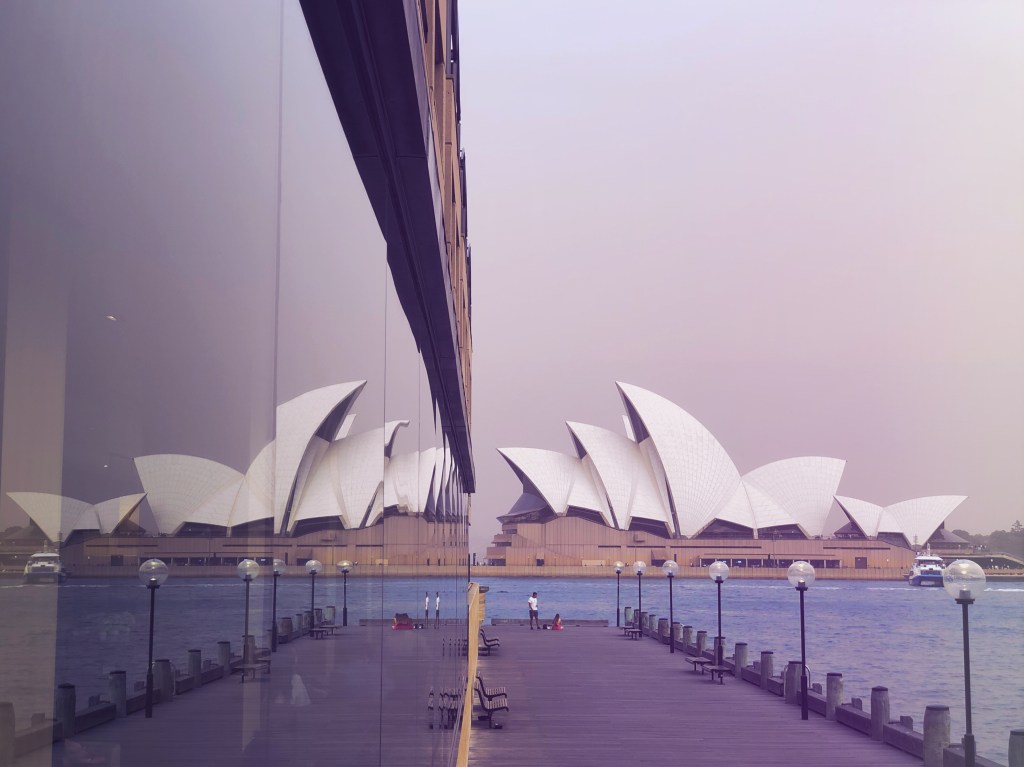
Thanks Atreyee. Lovely post. And fabulous photos. The one of the Opera House really stood out for me.
Alison
Thank you so much Alison! I was ecstatic to be able to explore with the help of Gadigal guides who deepened my ability to see and understand the land they honor and tend. I agree so much more needs to be done in order to ensure that the indigenous have full agency and equity for their lives. You ask such wonderful questions about being able to “un-know” what we’ve become familiar with, and it’s such a difficult task requiring effort and commitment as you stated…but when it happens — How beautiful, as when the lands sang to you in Kakadu!
Happy New Year, thank you for sharing your interesting post. Lovely to hear from you and best wishes in your writing… keep it up! ✒️❤️
Thank you so much for your kind comment. Wishing you a most wonderful New Year!
Beautifully and thoughtfully written as always. I find it usually takes time to settle into a place, and connecting with its history and its nature does help.
Thank you so much. Yes, you are so right! As with any relationship, there is no shortcut to spending quality time. I’m so lucky to be able to do that in so many of the places I explore! Hope this finds you well.
Thanks for sharing this reflection.I love these captures in Australia and we visited there a few years ago..Anita
I’m glad you enjoyed the post and thanks so much for letting me know! I hope you had a marvelous time when you visited Australia. Wishing you well.
And it seems for many, that lack of tension is the ultimate goal. To escape anything outside their comfort zone or their tribal traditions.
Somehow, it seems like simply paying attention to smaller things around us with an eye to other contexts would lead to a richer life – even if it isn’t always comfortable.
Indeed! Discomfort and change are two things many humans like to avoid like the plague….
Wishing you a happy new year!
I feel like in Indonesia the trend of big signs with city names has become somewhat an epidemic. It’s everywhere! These signs often take away the natural beauty of a place, or ruin a cityscape that had otherwise been charming in itself. Anyway…
This blog post reminds me of how we often perceive a place superficially. It’s not necessarily wrong, but it doesn’t paint a clearer picture of what the place really is about, the people who built it, the history that shaped it, the hopes and the challenges it faces today.
Haha, you’ve noticed that too? It feels like an easy out for cities: oh we don’t need more parks or better public transportation or cooler architecture? We can attract people simply by putting up a sign that millions will want to selfie with and post on their social media feeds? Done!
Given that most visitors and tourists don’t really have that much time to develop a relationship with a place, it brings up uncomfortable questions about the nature of leisure travel. I always appreciate your thoughtful comments. Hoping this finds you well as you begin 2024.
Thoughtful, as usual. On a more ordinary level, I thought I was the only one who questioned those big, colorful signs with city names and hearts. I was so confused when they first started popping up. As you say, “A place isn’t unique because it has a colorful sign of its name sitting in a commercial plaza. A location has meaning because it allows one to answer the question: how do I know where I am?” Answer: I’ve found another sign to take a selfie with.
Hahaha, I love your answer to the “How do I know where I am” question! I too have been noticing this trend. It’s all about bringing those social media influencers to your town.
Another beautifully written piece. Some notables for me: “Because I know a little, I think I understand.”
“I’ve been busy searching for stories and forgot to listen to the ones being told to me.”
“… the importance of translation. A bridge between cultures, an intermediary, an amplifier of limitations, translation can approach a destination but never attain the original’s true meaning. This makes the interpreter in many ways a tourist of implications, a child of languages, a novice to any project”
Aw, thank you for marking out your favorites! Hoping this finds you well in the new year. XOXO
“As our relationship sphere enlarges, so does our imagination. As we move across terrain, we listen to all the stories our kin has to tell so that we can carry their knowledge forward. Because that’s what our purpose is.” That is the basis of our lives. Beautifully told … a great capture of the essence that is Australia
Thank you! It’s wonderful to hear you say so as you have a deep knowledge of the land which you so affectionately term your “back yard!”
I follow the logic but I’m still quite under the weather, so thinking’s not what I do best, Atreyee. I think I spelled your name right.
Oh Jo, so sad to hear you’re under the weather! Hoping this finds you recovering swiftly and sending all the hugs and virtual hot tea 🫖and cake 🍰 I can get my hands on. 💜
Thanks, darlin!
A thoughtful post .. insightful and a step along the path of understanding the marvels and intracies of all that is around us … despite our efforts to render them to the past due to our buildings and development…there’s a sign at tank stream lane to remind us of the waters that presumably still flow beneath the city heart …
Thank you for your kind comment! I always love discovering these hidden indications of history. Wishing you a wonderful new year.
Thank you for your, as always, beautifully written musings. They remind us to keep all our senses and mind open to everything and everyone around us because this is how we learn and gain a deeper appreciation for the world we live in.
I appreciate your kind words. Wishing you a very wonderful new year!
My pleasure. And I wholeheartedly return your good wishes for the new year.
Such deep and lovely reflections, Atreyee. Your post reminded me of a powerful video an Australian friend shared with me a few years ago, and a recent series on Netflix. Both took me inside of fascinating stories that highlight the diversity of the people, both Indigenous and later arrivals. I’m sharing the links in case you find them interesting.
DADIRRI (Official Miriam-Rose Ungunmerr Video)
Miriam Margolyes: Almost Australian (Netflix)
“Actor Miriam Margolyes has new Australian citizenship — and a lot of questions. In candid interviews, she investigates what it means to be Australian.”
Sending my gratitude for the chance to read your always thoughtful posts along with my best wishes. 💜
Thank you Carol for the links. I’m looking forward to watching them. It’s been so wonderful to have been able to share ideas and thoughts through this medium with you and I’m looking forward to our continued inspiring conversations in the new year. Wishing you all the very best! 💜
💜
Another beautiful post BT. Encouraging us all to look beneath the familiar. I’m glad you’re delving deeper and enjoying other parts of Sydney. Look outside the known and comfortable and you’ll find it is a diverse and multicultural city. Your images made me a little homesick. Especially the one of the jacaranda tree.
🥰 Your words touched me so deeply. Hoping you will be able to visit what was once home to you soon and wishing you a new year filled with love and wisdom.