
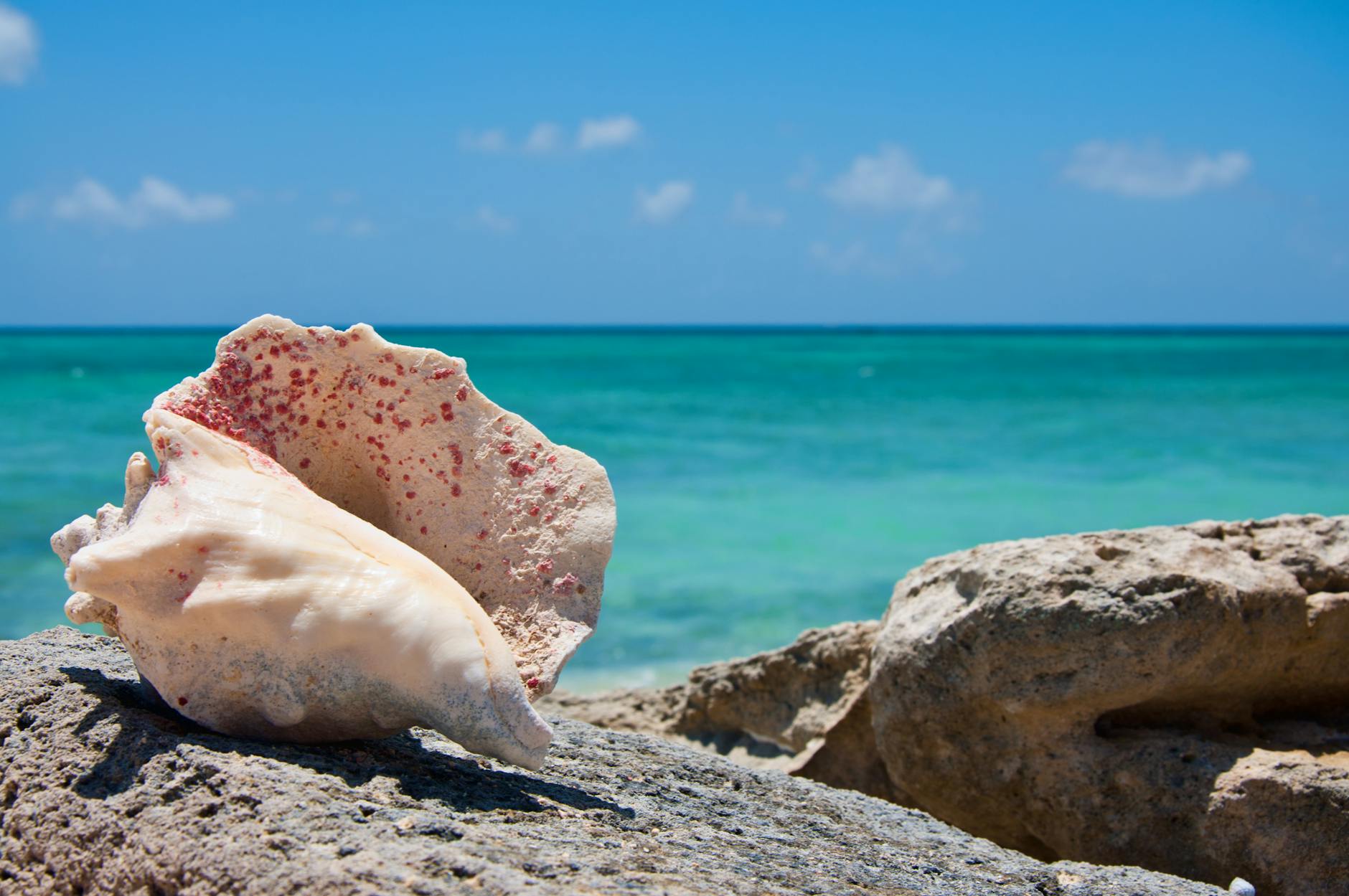
The outer shell is glossy, and imprinted with the pastel hues of a sunrise: rose-pink, coral, buttercream, and mauve. Inside lives a wary, gelatinous creature who cleanses the coral reefs and feeds on algae. As with every non-human on the planet, the conch plays an essential part of maintaining a healthy oceanic ecosystem. They are vital to the growth of seagrass and the population of turtles, one of their predators. They are, of course, as deeply essential to the lives of Bahamians.
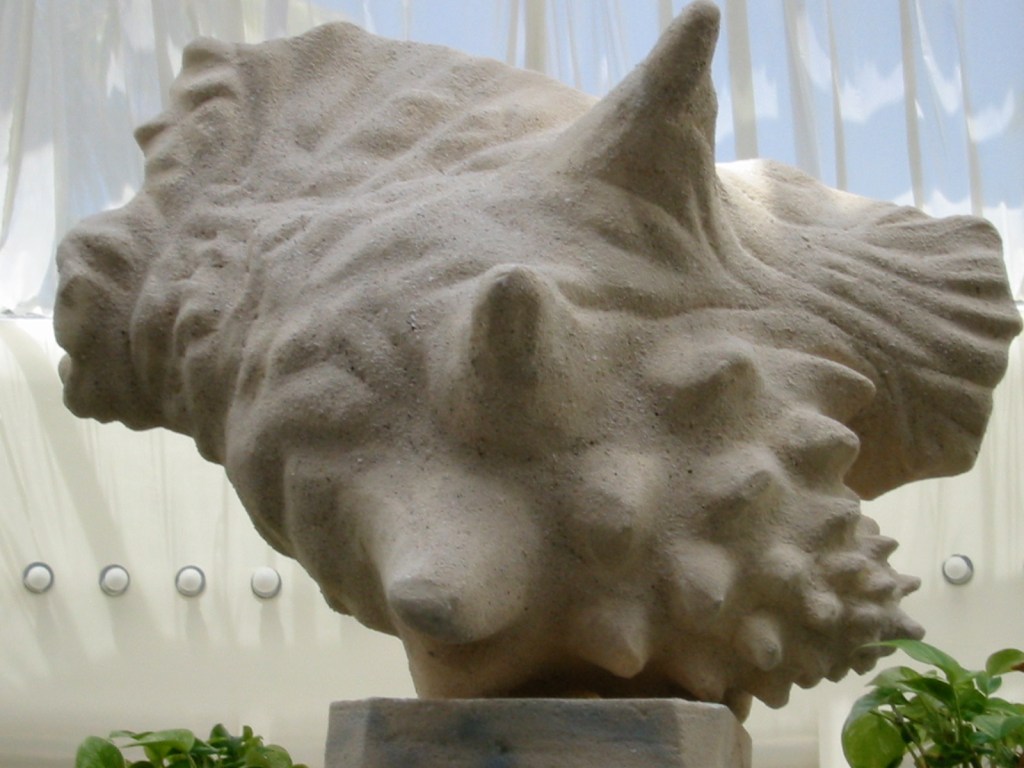
The myths are already in place. How there used to be so many conchs a child could easily find them swimming. How they used to feast on the mollusk as salad, as aphrodisiac, as sustenance. How shells piled up so high they became jetties.
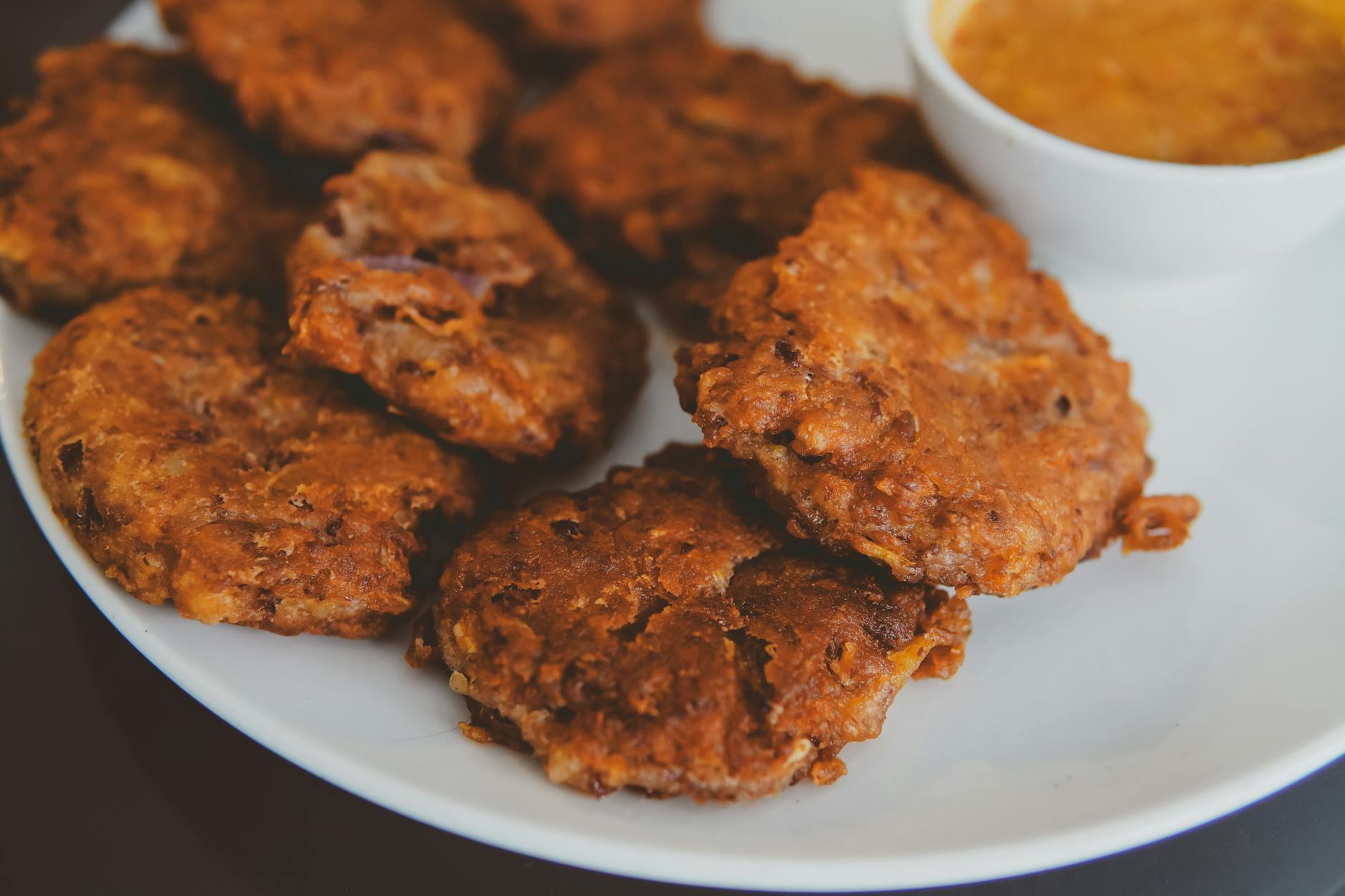
For the indigenous of the Caribbean, conch was a staple both as diet and as medicine. For Bahamians today, a conch-less life is both unthinkable and swiftly becoming reality. Food is one of the cultural lifelines Bahamians cling to ferociously as a way of remembering and celebrating how things were. They used to be fishers of conch. Now that is gone. Soon, wild caught conch will be a relic of the past as the climate crises decimates sea-life.
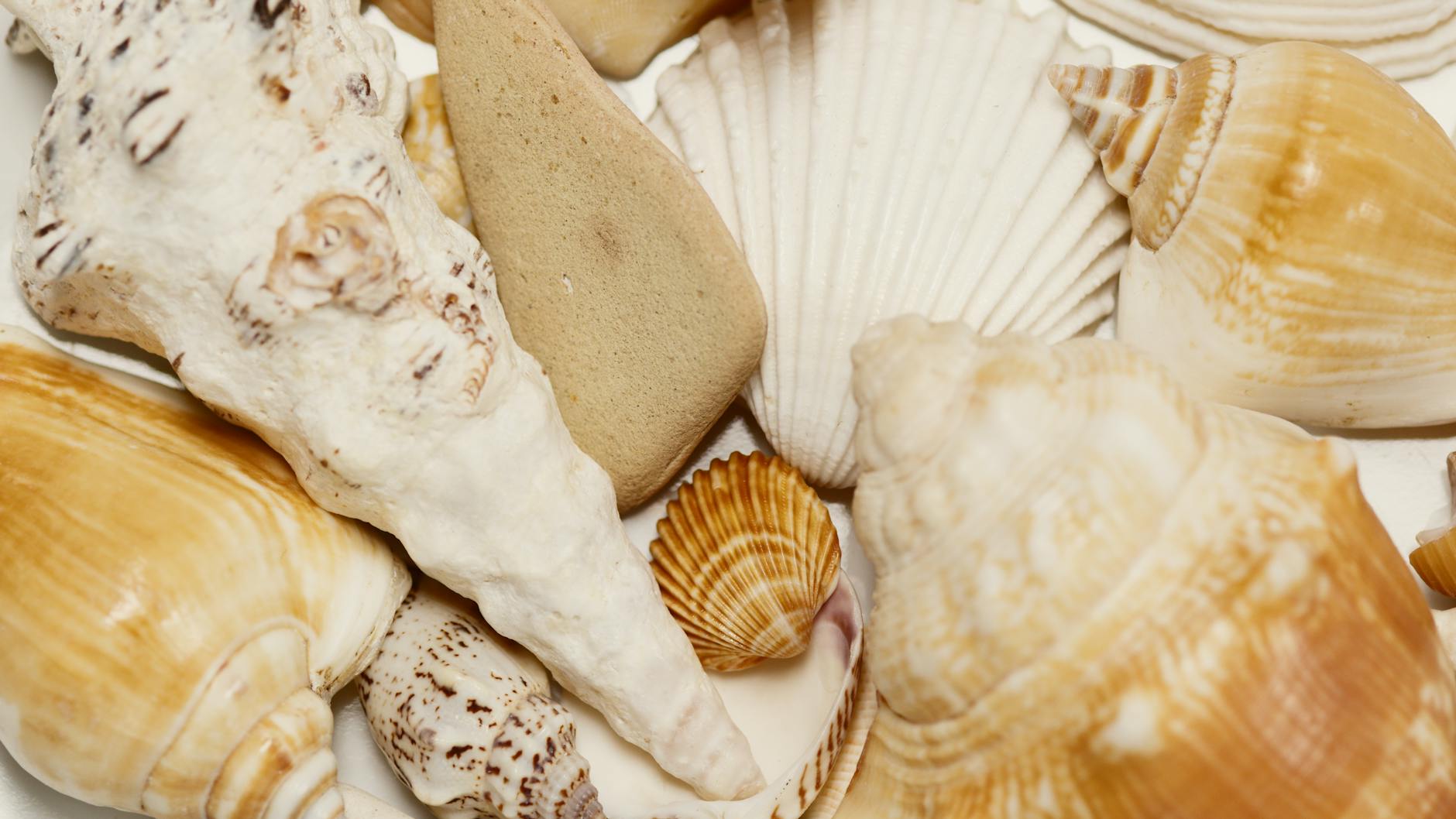
They were makers of conch art, offering the multi-hued shells as souvenirs, creating jewelry and sculpture from the pearlescent outer case. Today plastic replicas are replacing the rare mollusks.
They are bearers of a history eradicated by colonization. Conch graveyards are one of the few remaining cultural markers of the indigenous populations and ways in which they lived. As sea levels rise and destroy archaeological evidence of peoples whose existence was mostly erased from official records, the conch’s lifecycle and its many ties to Bahamian society becomes ever more necessary.
BT’s CONCH FRITTERS
Serves: 8 persons
Total Time: 30 minutes [Prep Time = 20 minutes, Cook Time = 10 minutes]
WHAT YOU NEED
Ingredients
- 227 grams conch
- 125 grams all purpose flour
- 1 egg
- 118 mL milk
- 946 mL oil for frying
- salt and black pepper to taste
- 1 medium cayenne pepper, optional
- 1 onion, medium
- ½ medium green bell pepper
- 1 ½ cloves garlic
WHAT TO DO
- If the conch meat does not come cleaned and pre-cut, make sure to parboil it and chop finely.
- Lightly beat the egg and combine in a large bowl with flour and milk.
- Dice the onion, garlic cloves, green pepper, and cayenne pepper. Add to the flour, milk, and egg combination.
- Add the chopped conch meat. Season with salt and pepper.*
- Mix the batter well, making sure the ingredients are evenly distributed. The mixture should look like a slurry.
- In a deep skillet pour frying oil until it reaches two-and-half centimeters up the sides of the pan.
- Heat the oil to 185 degrees C
- Make tablespoon sized balls out of the batter and drop into the hot oil.
- Fry until golden brown, two minutes for smaller balls, four minutes for larger ones. Do not overcrowd the skillet.
- Remove done fritters with a slotted spoon onto drying rack or paper towels and add extra seasoning if desired.
- Allow to drain and cool, five minutes.
- Serve with favorite dipping sauces.
* BT Tip: Add shredded coconut to the batter for a sweeter, nuttier flavor.
Are there foods you can no longer find or that are no longer cooked in your community? Tell me about them in the comments!
Discover more from Bespoke Traveler
Subscribe to get the latest posts sent to your email.






 Bespoke Traveler
Conch are one of the things that makes the Caribbean food unique … especially delicious in fritter form! Great post and pictures. I once had a conch lamp that had a night light in the middle. Another time there was a hurricane off the Outer Banks while we were visiting. A whole bunch of conchs washed up on the beach.
“especially delicious in fritter form!” Yes! Thank you for sharing your conch stories with me, I’m curious to know what your conch lamp looked like, it sounds like a fantastical thing to have by the bed!
Yes it had a small bulb inside like a nightlight and it glowed.
I have never eaten conch, either as fritters or in any other form. And I don’t know if I would now, especially given their precarious status.
How sad to add to the already-too-long list of creatures endangered or extinct because of what we humans have wrought.
Indeed. The numbers are mind-boggling. I always appreciate you dropping in to read and comment. Hoping this finds you well.
Thank you, we are doing well. I hope you are too.
Interesting. I hadn’t thought it was edible. Though on second thought most things are. With exceptions. I always think of our prehistoric foreparents, struggling to find food. And designating a member of the tribe to taste a possible new source of food.
“Bill. Your turn to taste. Try this conch.”
“No way. Not me. I still haven’t recovered from the berries I tasted last week.”
😉
😄 I had this exact same thought the other day! How on earth did humans first come to try so many things that we now accept as part of our everyday lives? Our prehistoric ancestors must have been an imaginative and curious bunch.
And they must have had a few bad accidents with poisonous food…
For sure!!!
It breaks my heart, what we are doing to the planet. This is one tiny example, and again and again it is the story of colonization. I’ve been writing lately about Africa and the ravages of colonization there. I actually have a conch shell, a gift from a friend forty years ago, when they were perhaps more easily found. But those fritters sure look wonderful!
Alison
Yes, it is a heartbreaking story we keep repeating over and over. How beautiful to have such a lovely gift from a friend! I’m excited to go over to your site to check out your latest.
This brings back memories of an outing in the Turks and Caicos, where lunch was a conch ceviche, with conch picked from the sea floor on the way to the lunch spot. We kept the shell of one of them as a souvenir. But I do wonder if they’ll end up having the same fate as the Bahamans’ conch.
It’s so great to hear from you! Hope this finds you enjoying the summer season in your neck of the woods. Funnily enough, Turks and Caicos is the only place I know that has a working commercial conch farm. I suppose the future will let us know the viability of such an endeavor.
My mother loved her conch shell, acquired on a winter vacation in Florida. Like so many objects we grow up with, its identity merged with the background, but just looking at your photograph, I see again what a beautiful, remarkable creation it is. That lovely wing and gorgeous coloring. So sad to learn how conch are disappearing and with them an important part of a culture. I don’t imagine they can be farmed, either?
As far as I know there is only one commercial conch farm at the moment which is located in the Caribbean island of Turks and Caicos. Farmed conch doesn’t grow as large as that in the wild and breeding complexities make it currently a difficult economic proposition for many. Your mother’s conch shell has me thinking about how memories around family treasures morph as they get passed down generations.
Sent that too quickly! Also wanted to comment that I can’t think of any specific dish, but for sure they are evolving with time, and some going extinct, impacted by human actions like everything else. Such an interesting angle in this post!
Thanks! As we move towards a planet whose climate is averse to how humans have been used to living, I wonder what future changes will happen to the ways in which we eat.
It’ll have to become more ecological, but I wonder if ”we” will notice it? I mean, I’ll be long gone, but will the changes happen at such a subtle pace that people will just adjust?
I think it depends on who the “we” is, but just as more of us are starting to feel the excessive heat every year, I think the first ways we’ll notice the changes is in the prices and availability of groceries.
How exotic this sounds to me! I had no idea people ate the little creatures inside these shells, and raw, even! (I had to google more info!)
Sounds really enticing!
The conch fritters were delicious!
I don’t think I’ve ever had conch before. Are the texture and the flavor of it similar to other mollusks? Thank you for sharing with us this cultural aspect of the Bahamians, Atreyee. It’s always sad to read about how climate change is affecting people’s ways of life, especially when it comes to things like this that are deeply tied to a traditional culture.
I’m always so grateful for our lovely discussions, Bama. I find conch to be chewy, with a texture that is similar to scallops rather than oysters or mussels. They don’t have a strong distinct taste and tend to take on the flavor of spices added to them which is why the most popular way to eat them is as a fried platter with an accompanying sauce.
Thank you for writing and sharing about this. I had no idea. What prompted you? Are you in the Bahamas?
I appreciate that Lani. While in the Bahamas I heard many different people from those who still fish to chefs and jewelry makers tell me about the importance of conch and their current struggles to maintain their livelihoods from it.
So sad that conch are disappearing but why am I surprised? Everything good and beautiful seems to be disappearing these days.
🤗 It can feel like that so often, but then I always remind myself that there’s still so much magic in the universe. And these delightful chats I have with you and others brings me to back to the love. Thanks for being here and wishing you a July filled with goodness and beauty. 💚
Thank you for your beautiful words, I needed to hear them during a tough time that I’m going through right now. There is a lot to be thankful for as well!!! Xxx
🥰 sending you lots of love from my neck of the woods.
❤️❤️❤️
I’ve never tasted conch but your fritters look good. It’s a changing world, but wasn’t it always, Atreyee? Nothing stays the same 🤔🩵
The fritters I had in the Caribbean were delicious! Absolutely, change is inevitable, it’s a question of what kind of changes and how they come to be…
wishing you a lovely month of July!
🤗🩷
What a beautiful way to write about the connection between food, culture, identity, and place, Atreyee. So much is being altered by global warming. It will be interesting to see how people choose to either adapt or stubbornly cling to the old ways.
Thank you Jolandi. It will indeed be interesting to see how we all will have to adapt in the coming years/decades from the former ways of living we have known.
I love conch and have eaten many time in the Caribbean but the shells I felt they were sacred in a way and needed to stay in nature. Of course every store had them for sale. If I wanted one I would buy an artificial one. The world is finding less food they once ate and it’s downhill from here.
Conch was a delicious treat to me when I visited the Caribbean and I’m grateful I still got to experience them in various dishes. Thanks so much for stopping by to chat! I love how you expressed your feelings about leaving shells where you find them. Wishing you a wonderful July.
You have a great and safe July. Look forward to seeing you around.