
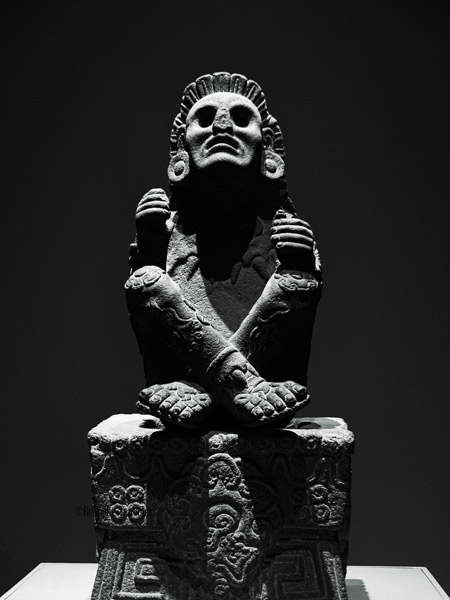
 Spirits of ancestral Mesoamerica hover beyond my periphery. Wandering through the Anthropology Museum in Mexico City, I can hear their prayers aspirating among the sacred icons. This is no customary aspic collection of austere antiquity. The exhibits pulse with seismic energy. Xochipilli, patron of art and love in all its sensual facets — his head tilted up, his seated body alert — summons the ghosts of dreamers. An Olmec head, with a frown and piercing gaze, conjures the anima of its slumbering despot. Chacmool, reclining in submission, proffers himself as portal between me and valorous eagle warriors. Even the floor-to-ceiling windows, the marble parquets, the geometric latticework evoke pre-hispanic allusions. Nothing is basic within this complex. Statues, amulets, materials, balusters, and the patio are symbols of a timeless philosophy.
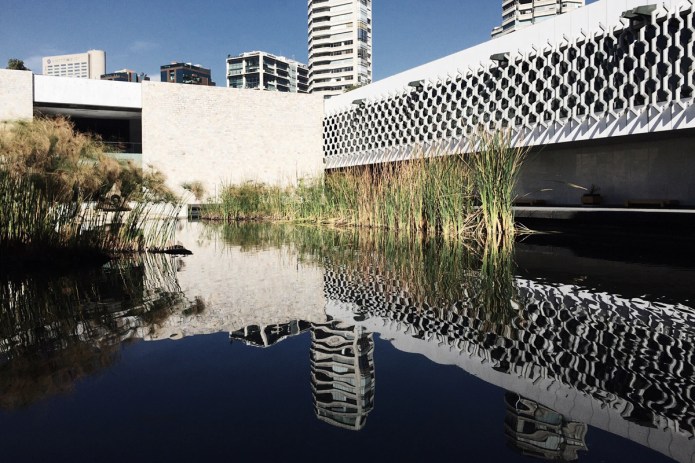 In the courtyard, under the waterfall, I perceive the hollow notes of a Nahuatl melody. The scenery shimmers, shifts as if an invisible curtain were drawn aside. I am no longer seated by a sunlit pond. Instead I am surveying a reed dabbled lake at the dawn of this valley’s civilization.The murmur of elders behind me discuss the viability of crops; children laugh as they gather firewood; the shuffled footsteps of washerwomen approaches. I turn my head and the shroud drops, the setting comes back into focus. There is no laundress, no gamines, no settlers. A young woman shambles towards my bench to rest her weary feet; teenagers giggle as they race through the hall; a tour group argues under the metal umbrella. Discombobulated I catch my breath, a time traveler out of sorts.
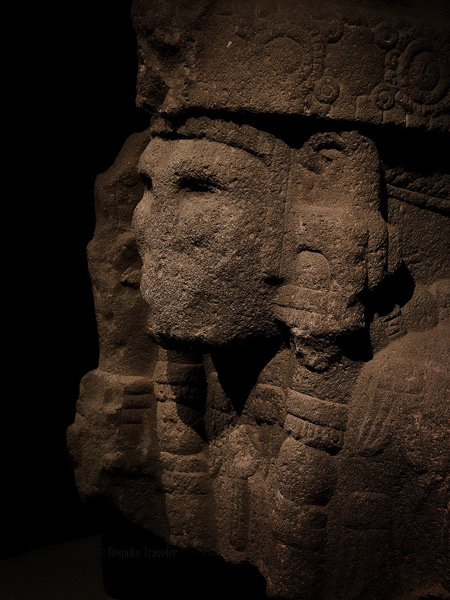
This keeps happening to me throughout Mexico City. It is as if the dead have woven themselves into the fabric of contemporary turmoil. The surreal is never too distinct from reality. Phantoms of another epoch walk beside the banker, the student, the artist, the entrepreneur, the mendicant. Capricious gods of yore hold court alongside the Christian trinity.
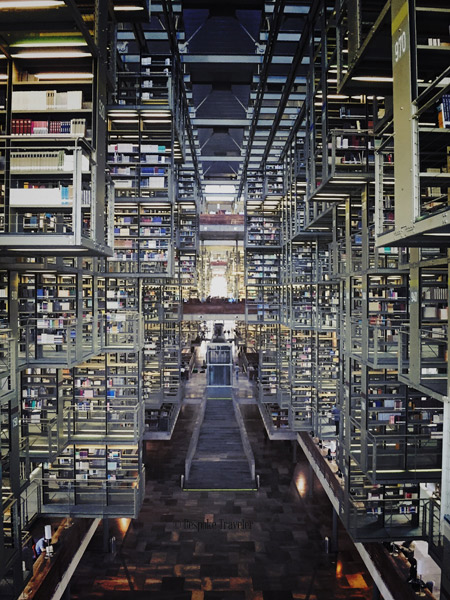 I make my way through the Metropolitan Cathedral — an extremely Baroque edifice with the stamp of conquistadors in its gilded reredos, its vaulted ceilings, its domed bell towers. Every detail here exclaims its Catholic fealty. The thrum of somber organs reverberates with accusations of sin. Mournful retablos encourage remorse. Apostles bristle with martyrdom alongside Solomonic columns. Yet, its deliberate corpulence cannot trample the soul of the Aztec sanctuary it crushes underneath.
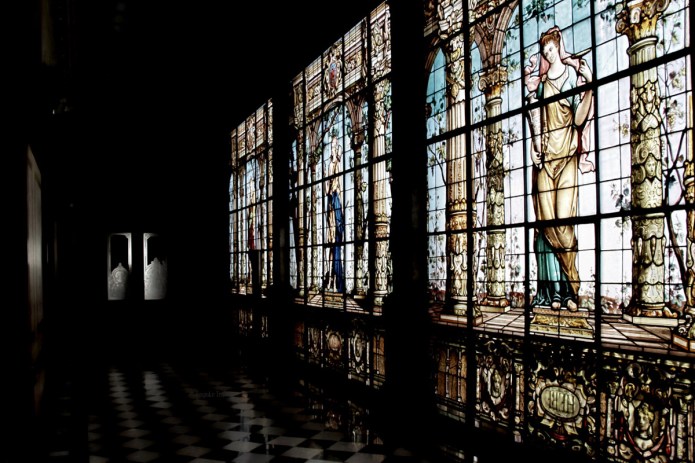 The foundation stones themselves belong to another allegiance: dismantled from Montezuma II’s venerated house of worship, reconfigured into a new myth. As a physical and metaphorical sign of conquest Cortes’ men erected their basilica out of Tenochtitlan’s rubble. However, the slabs have not forgotten. The crypt may shelter disregarded bishops, but the legends of Iztaccíhuatl, Quetzalcoatl, Tonatiuh are not yet buried. Christ is depicted here as savior and also “Lord of the Cacao.” In the crepuscular alcoves denied to the devout, wights susurrate incantations to former deities. Above the funereal hymns I can almost discern their primitive paeans.
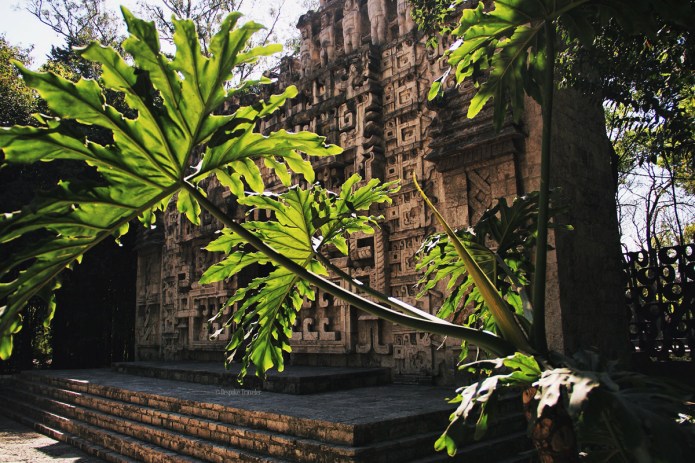 I wander over to the archaeological dig of Templo Mayor. This is the center of Mexica power. Seven centuries of religion and politics quiver within the exposed deposits. Now mere decoration, they still possess their authority. A pair of toad sculptures, conduits of rain god Tlaloc, glowers. Carved serpent heads slither along steps in knotted glory. Rust daubed pavers, residue from once brightly painted facades, darken under cloudless skies like ichor. This site vocalizes humanity’s pattern of revolt and subjugation. Each tilted layer uncovers the previous society’s hopes and struggles. The specters here are bold, unapologetic about the interplay of beauty and savagery. They devour the sagas of previous generations, brazenly incorporating them. I try to decipher their words of wisdom. Witnesses to immeasurable evolution, they must know all the answers.
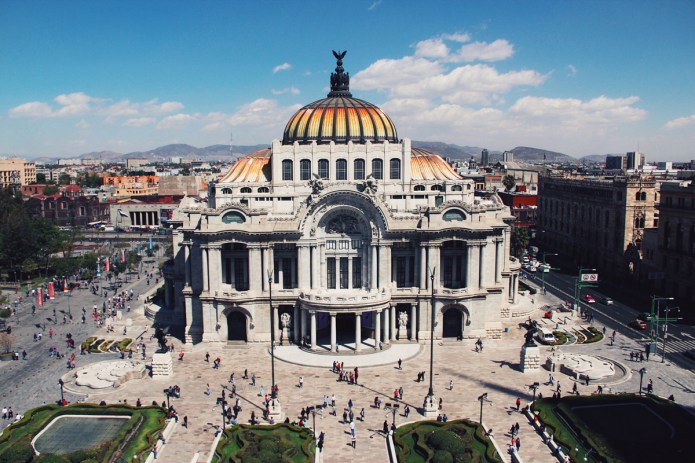 I scrutinize the crumbling terraces, the chiseled parapets, the splintered stucco in search of those answers. How does one achieve potential in the surety of inevitable decay? How does one retain truth while adapting to new dogma? How does one become resilient without sacrificing love? Mexico City has found a way to incorporate growth without falling into the pit of doubt. I scan the excavated Nahuatl shrine, the domed Spanish Palacio, the rectangular twenty-first century mall, amazed to find myself at the crossroads of epochs. An embryonic era rises out of the ashes of extirpation. While other cities flaunt their monotonous development of progressive infrastructure, this metropolis dances with its heritage. While others entomb fate’s assaults under asphalt, Mexico City bares its innards for posterity. It is proud of its variegated messy past.
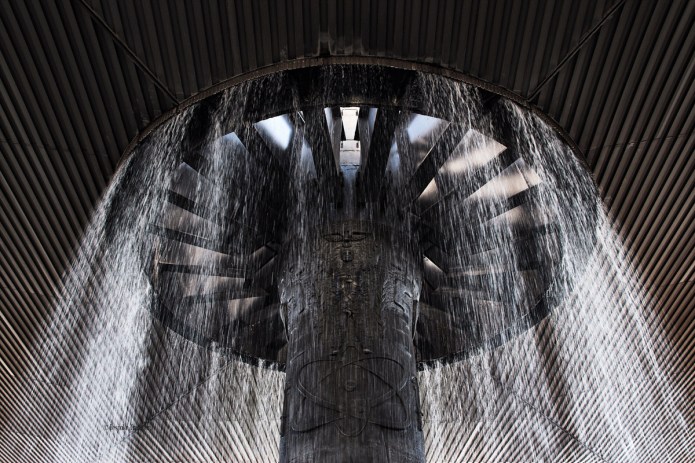 Running through that chaotic narrative is the convoluted solution: in the cyclical cosmos we perform our singular acts. It is a philosophy that connects with me. Despite failed governments, incessant inequity, destiny’s shifts, life is spent to the fullest. The neighborhoods are replete with colorful art. There is exquisite cuisine fusing tradition and avant-garde technique. There is laughter in the tumultuous avenues, smiles in the hushed alleys. Parent, scholar, virtuoso, and laborer tackle the burden of integrity with unabated determination. I am inspired by their perseverance. I am motivated by Mexico City’s voice. The spirits speak clearly to me. “Here you are,” they say, “who you ought to be. This is your time, make the most of it.”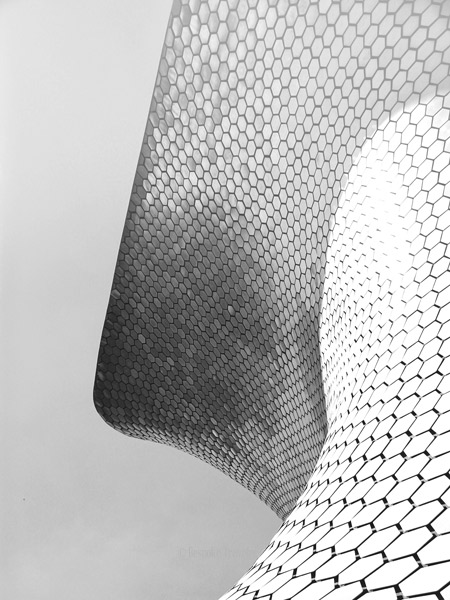
TRAVEL NOTE:
When the Mexica, a wandering tribe, arrived at the Anáhuac there were already thriving agricultural communities in the area. Conquering them, the Mexica set up an elaborate empire. By the time Hernan Cortes visited Tenochtitlan, the temple complex within the capital, had undergone seven expansive iterations above its original construction. All of these can be seen at Templo Mayor.
If you have experienced Mexico City, let me know your thoughts in the comments below. In what ways can cities better incorporate their history while modernizing?
Discover more from Bespoke Traveler
Subscribe to get the latest posts sent to your email.





 Bespoke Traveler
Thanks for this interesting tour through Mexico City. A fascinating blend of modern and old. You must have been in sensory overload there, exploring and delving into the city’s secrets. How long did you spend in Mexico City?
So glad you enjoyed it! I spent almost two weeks in Mexico City – but it’s not enough to take in all the nuances of its different neighborhoods. There were so many corners and layers to explore, and so much to absorb.
PS oops I missed the end question…I think the best way for cities to incorporate their histories while modernizing is to preserve and restore as much as possible. The value of being declared a UNESCO world heritage site other than the touristic draw is of course the strict rules of preservation and what can be changed or incorporated…
Peta
🙂 Thanks for responding to my question. I did not know that classification as a UNESCO world heritage site including such strict guidelines. Most places that are designated as such seem to be over-burdened by the weight of tourism and its effluence.
Beautifully written and photographed. Thanks for all the interesting information and for sharing the anthropology museum. So much incredible history.
Peta
“It is as if the dead have woven themselves into the fabric of contemporary turmoil.” I often imagine the peeling away of layers of time, when I travel. Perhaps I just have an over-active imagination, but slipping through these layers help me to gain a better understanding and connection with a place. And I love how you seem to be aware of this, when travelling too. Your descriptions feel like a shower of words, nourishing my soul like a cold shower will rejuvenate my body on a hot summer’s day.
“Your descriptions feel like a shower of words, nourishing my soul like a cold shower will rejuvenate my body on a hot summer’s day.” 😍 Thank you for that! Like you, so much of my travel enjoyment comes from that same ability to sense the past. Urban places are like characters to me and it’s difficult to become intimate with them without an understanding of their history. It’s much easier to fall in love with the place when I can achieve that “peeling away of layers of time.”
You summed up Mexico City very poetically and intelligently. Spoken from the heart, your experiences in the city seemed to be pure and extravagant at the same time. Being able to imagine its thriving past and to see all its facets, your narrative gives me a better understanding of the capital.
I have never been into the city, but we visited the temple complex on the outskirts when we traveled through Mexico in our camper for four months. Recently, we declined a two month winter house sit an hour south of Mexico City. While I would have loved to go into the city by public transportation from there and discover it in depth, we decided we could not commit that far ahead of time and that we can probably find a warm winter oasis a bit closer to the border. 🙂
Thank you Liesbet, you expressed my feelings so beautifully: exploring Mexico City has been a “pure and extravagant” experience. I am sure that when the time is right the two of you will find an opportunity to house sit in this fabulous metropolis. From the heart of the Old City to the hip Polanco neighborhood to leafy Condesa, the capital is a vastly intriguing conglomeration of art, business, history, and counterculture. I think you would love soaking in the colorful mix. In the meantime, I hope you are enjoying the warmth north of the border. 🙂
Mexico City is more beautiful that a lot of people imagine. It has a bad rep of being humongous and polluted (which it is) but there is also so much to see.
I agree with you, Mexico City is very beautiful. Most large metropolises struggle with issues of poverty, pollution, and convenience. Mexico City in that respect is no different than Los Angeles or Beijing, but I take this as par for the course. It’s been fantastic for me to delve into all the complex history, the avant-garde art, and the delicious food of this forthright, colorful place.
This post evokes many pleasant memories of our first trip out of the U.S. after I returned from overseas military service. We still have a book on the anthropological museum in our library.
So happy to hear you had a wonderful time in Mexico City. So many people usually go to the coasts of Mexico, but the country’s capital is full of vibrancy! I cannot get enough of all the cutting-edge art and food culture here and I definitely have been visiting the Anthropology Museum a little too much! 🙂
I was in Mexico City a few summers ago and was entranced by both the history and the heartbeat of the city today. For us, art bound the past to the present, from the treasures you mention at the Anthropology Museum to Rivera’s and Siqueiros’s murals to Frida Kahlo’s Casa Azul to Colonia Roma’s street art, and on and on … Really enjoyed your post on the city.
Thank you! I so agree with you about the importance of art in Mexico City…it has a rich and long past. Of course Kahlo, Riviera, and Siqueiro are well-known to the rest of the world, but I have come to deeply appreciate how closely their work is tied to that of Aztec icons, Olmec artifacts, and a profound cultural understanding of pain. I am also blown away with all the new architecture and public murals that are still an essential part of modern Mexico. I feel that the people of this capital are forging into the future with an absolute assurance of who they are.
Such an interesting read. No matter where we travel, there will always be an instance wherein the dominant culture (or belief) will try to override the practices of the native (older, slowly dying) culture(or belief). Very few travellers can see beneath the facade and try to imagine the world lost beneath. Your writing takes me there and your photography make me want to go there.
Thank you, I hope you do get to experience the vibrancy of Mexico City! Human history is a constant repetition of groups conquering other groups. It has been inspirational to see some of those previous stories of the conquered which we rarely get to discover.
Rich culture, lots of inheritance. I haven’t been to Mexico city, but to some other places. I’ve seen Acapulco, as well. I loved mexico a lot. Too bad we haven’t managed got there during the last 5 years. The contrast between poverty and wealth was extreme where we were traveling. Nature was absolutely breath-taking. I was surprised how I adored books in my childhood and among them was the Montezuma’s daughter. I had never hoped to be in Mexico in person, but that happened. I am originally from Latvia, just last 14 years in Canada.
Thanks so much for sharing your thoughts about your previous Mexico visits. As a country it definitely has a rich culture as you say, bound by pre-Colonial civilizations, the Spanish, and post-Colonial movements. In modern times it is very difficult to find a country that does not have a great divide between its poor and its wealthy – this is reality for where most of us live and travel. Welded into that disparity in Mexico City is a vibrant history which I hope you’ll get to experience some day!
Your report is intriguing, but also makes shivers run down my spine. It sounds like parallel universes of bygone times existing next to one another. I absolutely want to go!
😀 My experience was exactly like “parallel universes of bygone times existing next to one another.” I hope you’ll get to immerse in the magic of Mexico City soon!
It sounds a captivating place. I can’t remember reading much that advocated Mexico City so I was interested to hear your impressions. Love the aspect of the stained glass photo in the cathedral. 🙂
Thank you. That stained glass was among my favorite finds in Mexico City. 🙂 I think a lot of the focus is on the various difficulties the metropolis has undergone: a growth spurt that has exposed lack of resources, deep poverty against rarefied wealth, pollution, and violence. Though I do not want to diminish any of these issues, similar problems persist to various degrees in many, many other cities of the world. Stapled into that narrative is a vibrant artistic culture, an extremely delicious foodie revolution, and so much complex history. My personal experience in Mexico City has been a marvelous mix of noise, color, modernity, and ghosts of the past.
Liked the topic … Mexico, it really interested me when I spent some time there in the early 70s. Read the first two sentences of your post … I was hooked. That museum was one of the highlights of my adventures around the world. Changed my way of thinking or maybe reinforced the thoughts I was formulating … an older resident of this sprawling metropolis asked what I thought of their city. I told him, don’t get me wrong, it’s a great city yet cities are cities. The museum was wonderful … now I shall continue to read while I have breakfast here in Australia …
Hopefully you had an enjoyable breakfast in Australia. 🙂 Most cities these days meld into each other for me…lots of high-rises and international brands juggling for space. Mexico City really astonished me, perhaps because there is a deep desire by its people to embrace their painful and layered past, incorporating it into their future growth. I would be so curious to know what Mexico City was like in the 70s?
An interesting story told through your pbotographic journey. Thanks for sharing… nice writing! 🙂
Thank you as always for your lovely compliment.
You’re welcome.
Spectacular city: art, cathedral et al, in my bucket list, thanks for sharing, the article & photos allow one to dream on.
I think you would very much enjoy it. 🙂