
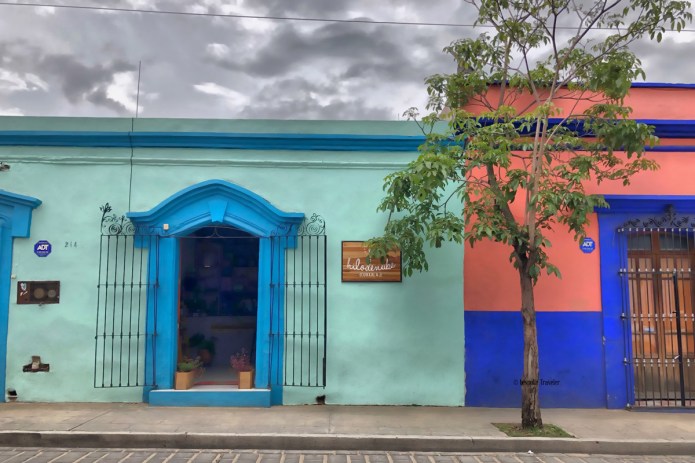
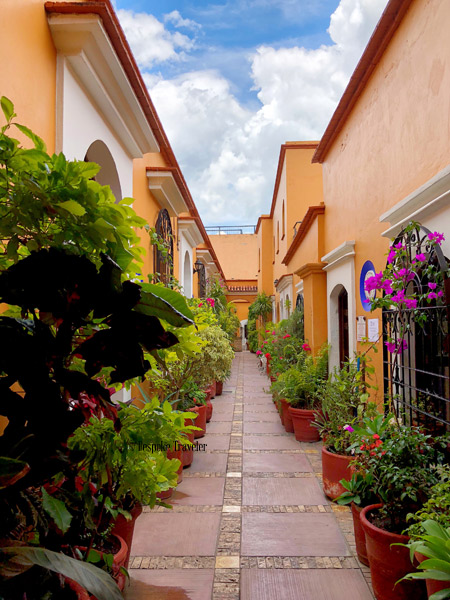
Ultramarine, coral, cadmium, lime…the house colors captivate me. They are an essential effervescent palette of Oaxaca, Mexico. To me they are also a significant message. They lead my eye to other juxtapositions: the clusters of maroon and purple bougainvillea trailing everywhere partner well with the ubiquitous jade of the cactus fences. Native succulents are used in all sorts of clever ways here — for sustenance, for enclosures, for remedies. In fact the sixteen indigenous tribes of this region see value in every portion of their environment. Interdependence is their credo.
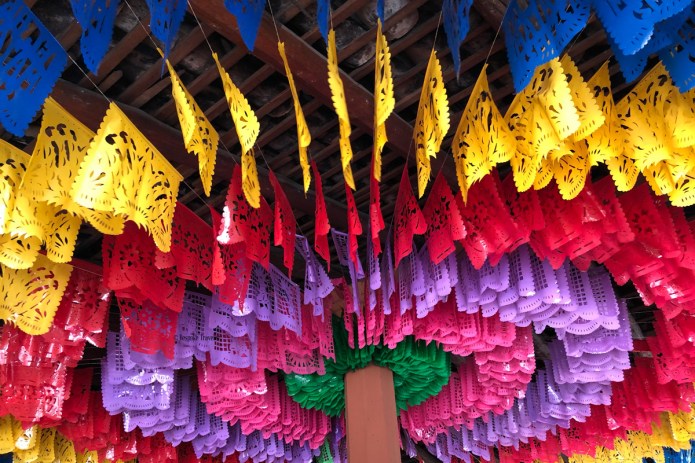
I learn about this, slowly. First, there is the proper collection of grasshoppers and agave worms for meals. Then, the lessons on how beans, squash, and corn flourish when grown with each other. I become familiar with the peculiar scent of copal. Next, the importance of symbols: zig-zag ladders for lightning, geometric spirals for life cycle, stylized figures for maguey.
Finally, follow the Pre-Aztec myths about pumas, wild rivers, and bat-gods. To me the stories are fascinating. For Oaxacans their legends are an integral means of transferring generations of knowledge about their traditions, how to live in accordance with nature, what to cherish. It is also a way to keep the music of their language alive. Language and land, I discover, are crucial to Oaxaca. They bear witness to one another. Together, they maintain the area’s unique diversity, both cultural and biological.
Of course the same problems plaguing every society — greed, jealousy, abuse of power — fester in Oaxaca too. The narrow valleys are considered impoverished by consumerist standards. The stewardship of the variant ecosystems by local communities is judged inadequate since there is no political or corporate oversight. The native reliance on territorial subsistence and well-being is viewed as anathema to modernization, progress, and globalization.
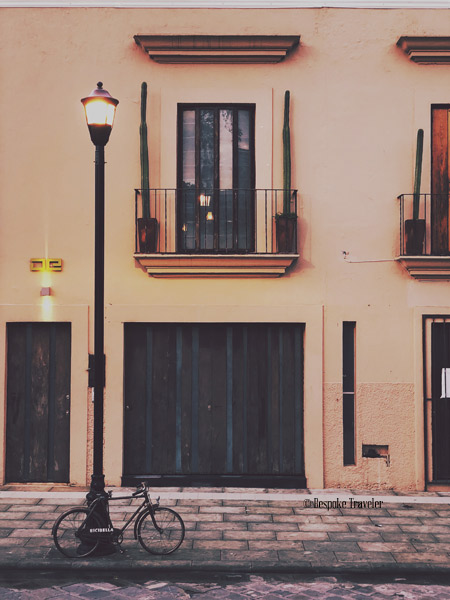
Despite the cultural instruction, my prejudices feed into these narratives as well. I pass by tin shacks and assume misery; I see plates of chapulines and presume scarcity; I encounter pantheistic artwork and infer orthodoxy. It’s not until I visit the ethnobotanical gardens that I realize how inextricably cultural heterogeneity is linked to ecological diversity. The connections are nuanced, but undeniable. The garden forces me to examine the multifaceted links between wild plants and humans. It reveals the successful development of ancient civilizations through their interaction with flora in aesthetic portrayals.
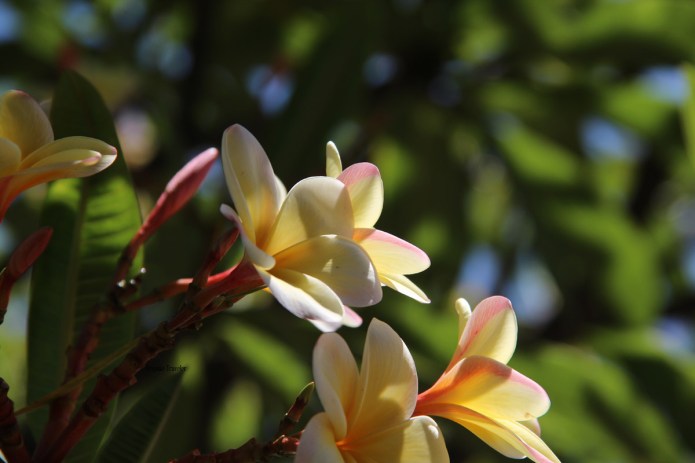
Oaxacans are adamant that if these relationships are not valued, if they are not protected, loss of belief and loss of identity will occur. Solutions to prevent a heritage deficit and the demise of harmony, however, cannot come from the outer world. They must be ministered by the community; specifically appropriate to Oaxaca; in balance with the terrain and those belonging to it; fused with both artistry and wisdom.
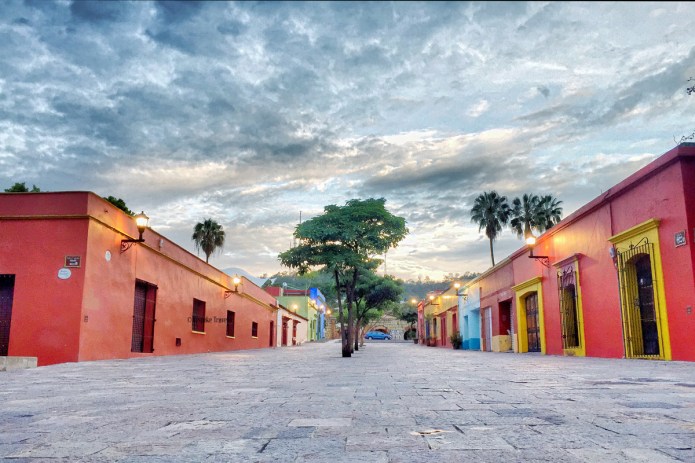
It’s been a privilege to observe Oaxacans taking responsibility for their particular plots, tending and preserving case-by-case, forging ever stronger bonds with the part of themselves which hearkens to the call of the earth.
TRAVEL NOTE:
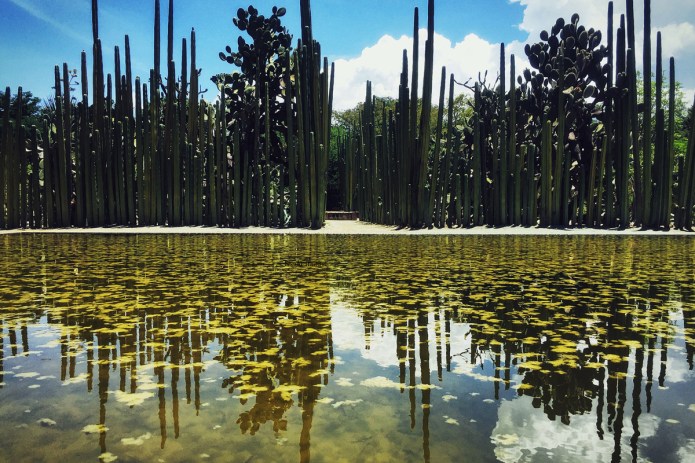
Among the thousand other endemic botanical specimens, the cacti of Oaxaca are as meaningful to the indigenous as corn. It is best to treat the living plants with respect, to avoid painful situations.
Colorful houses are a mainstay of warmer climates. Let me know a memorable destination where you’ve seen some creatively colored facades in the comments below!
Discover more from Bespoke Traveler
Subscribe to get the latest posts sent to your email.






 Bespoke Traveler
That would be too bad if Oaxaca were losing its [rich] ‘colors’ (But I sure hope that’s not the case)
One can only hope that Oaxacans continue to fight to preserve the diversity of culture and nature they hold so dear. Thank you for the visit.
I love the way you avoid the pitfalls of tourism. You see picturesque shacks and do not assume misery, my migrant students thought themselves rich in family and friends. They marveled at how American families are divided up instead of living together and doing together. I’d venture you see more than the average tourist.
Thank you for that perspective. It makes me sad that there should be any “pitfalls” in tourism. It would be a shame to miss out on experiencing our varicolored world in all its shades, for those of us who are privileged to travel.
I love your Mexican travels, there is something so mystical about the country. The weight of its history is often documented but the more natural elements are often forgotten. Our house is mint green (I am colour blind but have it on good authority), a colourful house always helps keep one’s nature as sunny as the weather.
There’s so much more to Mexico than the beach resorts and the Aztecs, and I was happy to delve into the history of other cultures while there as well as be introduced to the rich, varied flora and fauna. How refreshing to live in a mint-green house! Are most houses in your area colorful?
There is lots of different architecture as well as colours (lots of powder blues and bright yellows as well as the classic white), it’s always interesting to see a mixture of Spanish colonial and native houses, and the Nipa huts as well.
I loved exploring Mexico through books back in the day but it was the fantastic cartoon The Mysterious Cities of Gold that held me in thrall as a child.
Oaxaca is the part of Mexico that I’d most like to visit. It has always seemed so vibrant and traditional, and your account only reinforces this. Their spirit, and connection to the natural world, is inspiring.
I think you would like both the artist’s temperament that is here and how the mixture of ancient cultures have managed to survive.
The richness of the colors of Oaxaca match the richness of your prose. You render justice well to Oaxaca appeal and history. We do not know Mexico except for the time we attended a Bamboo conference in Puebla and we absolutely loved it. Now that I read this, for sure Oaxaca will be at the top of the list of a future trip to Mexico. LOVE the one before last photograph – the two rows of red houses against the sky. Phenomenal “painting”!! Thank you for a substantive and well researched post.
Ben
Thank you Ben! I’m excited I was able to transport you to the vividness I discovered in Oaxaca. I think you and Peta would greatly enjoy the artistic, laid-back lifestyle of the region and its dedication to living in harmony with the land.
I see from the first moment this is Mexico. I lived there 8 months in Toluca.
Good eye! I would love to explore Toluca at some point, it has such interesting architecture.
Gorgeous photos! The multi-colored houses remind me of the island of Burano in Venice. And those tall, straight cacti almost look like a fence, and indeed act like one with their prickliness. I love cacti (but not too close as the needles seem to jump off the plant right into your finger). I particularly like the saguaro when in rows along hillsides, like a squad marching.
Thank you Karen. I too have fallen in love with cacti since my time in California and Mexico. They have their own type of beauty, don’t they. The organ pipe cacti (tall ones) are a new favorite of mine I discovered while in Oaxaca. They are incredibly aesthetic for use as natural fences.
And such a descriptive name – organ pipe. I wonder what they were called before there were organs…
So well written and with such fantastic photography.
Thank you so much Karen.
Id love to visit Mexico, great photos
Thanks Charlotte! You’ll love it when you do come for a visit.
*gasp!* Your photos! They’re so beautiful!
The colours make this area seem like an otherworldly place. You’ve inspired me to add this to my Bucket List.
Also, you always help me see the world a little differently. Thank you for that.
Thank you for such high praise! 😊 It encourages me to keep doing what I do. Oaxaca is a wonderful place to get to know and I hope you get the chance to explore it soon.
“Among the thousand other endemic botanical specimens, the cacti of Oaxaca are as meaningful to the indigenous as corn. It is best to treat the living plants with respect, to avoid painful situations.”
What did you do? Those cacti in your photo are pretty epic. They look like an art installation.
😁 I got too close as I was eager to take my photos of the epic cacti. You’re right! These succulents are very stunning to look at in Oaxaca.
Wonderful ! I would love to go
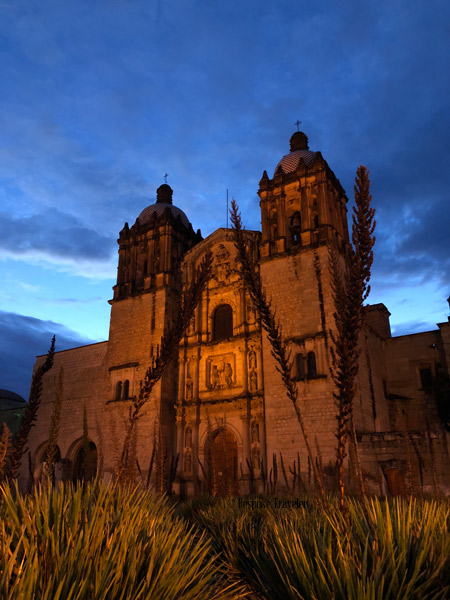
Lots of oohs and aahs here aboard Amandla this morning. The rich colorful houses showcased alongside natures splendor were a delight for the eyes this morning. And then there is that magnificent church at sunset. Wow. Just wow. I will spend the rest of my day pondering your thoughtful words , especially about assumptions born of predjudice and links between man and nature
Oaxaca is only one of the beautiful parts of Mexico, to me. I too have continued to reflect upon our link with nature, about the difference between interconnected and interdependence and how better to incorporate both of these concepts into my life. Wishing you continued safe journey aboard Amandla!
I’m new to wordpress and just came across your page, I was drawn in by the pictures and wanted to stop and see your page. I am a student at the ohio media school and a delivery driver in the mid west, I am inspired by your page, I had an idea to post pictures of the different cities I travel to but have not got into the site a lot since i created it. This is the first time i actually explored the site and i am glad i did, i followed so that i can come back and see more. Your pictures are amazing!!
Thank you for stopping by my website and I’m pleased to hear that you enjoyed my photos so much.
Thank you for sharing your comments and photos, the photos are amazing!
Thank you.